
TSP to Gold IRA Rollover: Federal Employee Guide
Federal employees and military personnel who participate in the Thrift Savings Plan (TSP) often wonder about their retirement account options, particularly when considering precious metals investing. Understanding how to execute a TSP to Gold IRA rollover can provide additional retirement planning flexibility, though the process involves specific rules and considerations that differ from traditional employer-sponsored retirement accounts.
The Thrift Savings Plan serves as the primary retirement savings vehicle for federal employees and members of the uniformed services, functioning similarly to private sector 401(k) plans. However, unlike many employer plans, the TSP has unique characteristics that affect rollover eligibility and timing, making it essential for federal employees to understand their options before making any retirement account decisions.
Understanding TSP Rollover Eligibility
The fundamental requirement for executing a TSP to Gold IRA rollover centers on employment status and age. Current federal employees under age 59½ generally cannot withdraw funds from their TSP accounts while still employed, which means active federal workers typically must wait until separation from service to initiate rollovers.
However, several circumstances can create rollover opportunities for current employees. Those who reach age 59½ while still employed may be eligible for in-service withdrawals, though these come with restrictions and may not include all TSP contributions. Additionally, employees who experience financial hardship may qualify for hardship withdrawals, though these typically cannot be rolled over to another retirement account.
Separated federal employees enjoy broader rollover flexibility. Once you leave federal service, you can generally roll over your TSP funds to eligible retirement accounts, including Gold IRAs. This separation-based eligibility applies whether you retire, resign, or otherwise terminate your federal employment.
Military personnel face additional considerations, as some may have both military and civilian TSP accounts that can be combined or rolled over separately. The timing of military retirement often coincides with second career opportunities, making TSP rollover timing particularly relevant for service members planning their post-military financial strategies.
TSP to Gold IRA Rollover Process
Initiating a TSP to Gold IRA rollover begins with establishing the receiving Gold IRA account. You’ll need to select a Gold IRA custodian and dealer that can handle precious metals transactions and meet IRS requirements for retirement account administration.
The TSP provides specific forms and procedures for processing withdrawals and rollovers. Form TSP-70, the Request for Full Withdrawal, serves as the primary document for complete account transfers, while Form TSP-77, the Request for Partial Withdrawal, allows for partial transfers if you wish to maintain some TSP balance.
Direct rollovers typically offer the most straightforward approach, as the TSP transfers funds directly to your Gold IRA custodian without the money passing through your hands. This method avoids potential tax withholding and the 60-day rollover deadline that applies to indirect rollovers.
For indirect rollovers, the TSP issues a check payable to you, and you must deposit these funds into your Gold IRA within 60 days to avoid tax consequences. The TSP typically withholds 20% for federal taxes on indirect rollovers, which you must make up from other sources when completing the rollover to avoid partial taxation.
Processing times for TSP withdrawals can extend several weeks, particularly during peak periods or when additional documentation is required. Planning for these delays helps ensure smooth transitions between accounts without creating gaps in your retirement planning strategy.
Tax Implications and Considerations
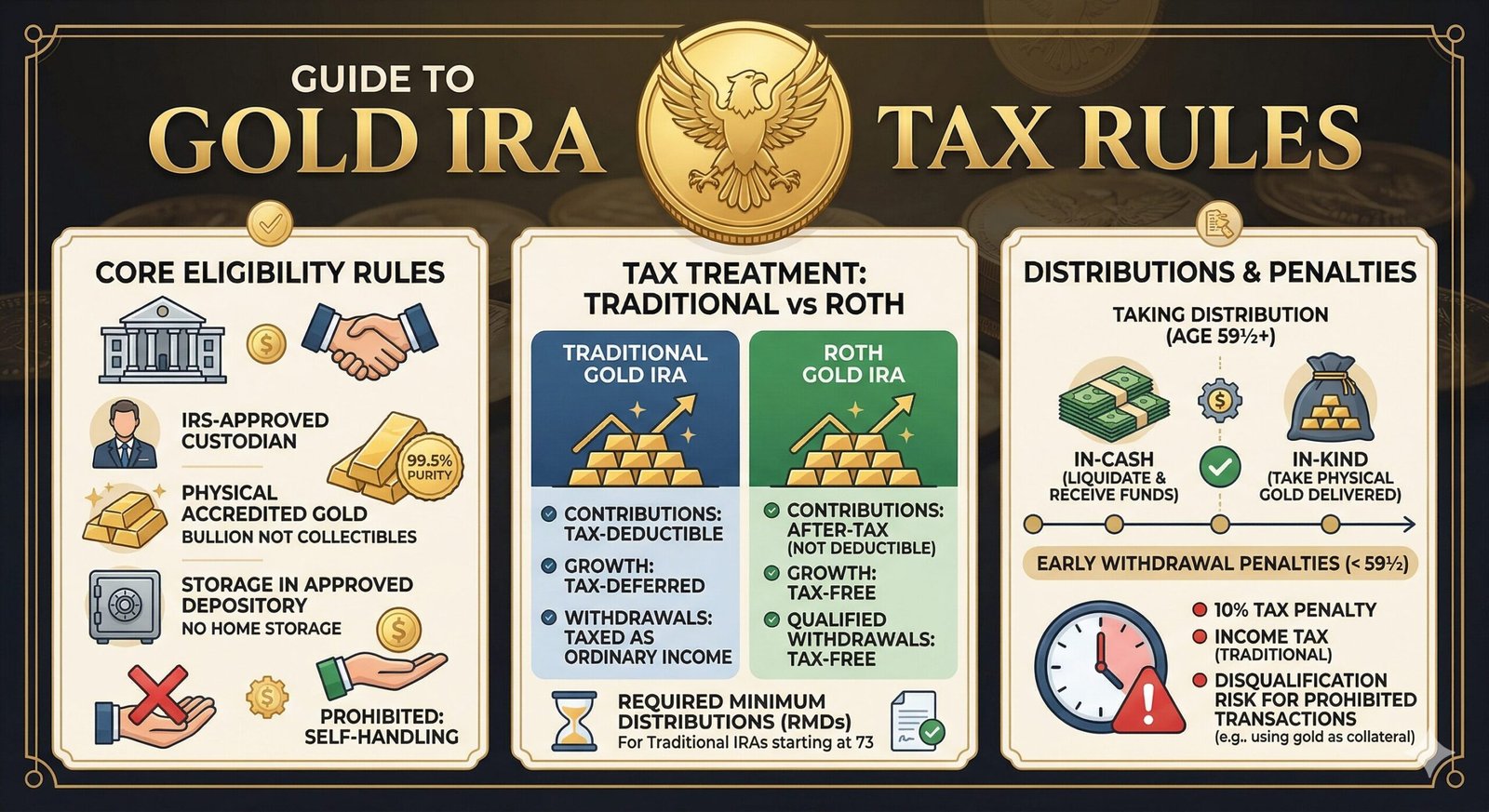
TSP to Gold IRA rollovers involving traditional TSP contributions generally qualify as tax-free transfers when executed properly. These rollovers maintain the tax-deferred status of your retirement funds, with taxes due only when you eventually take distributions from the Gold IRA.
Roth TSP contributions present different considerations, as these after-tax contributions can be rolled to Roth Gold IRAs while maintaining their tax-free growth potential. However, mixing traditional and Roth funds requires careful account management to preserve the distinct tax treatment of each contribution type.
The TSP’s unique matching contribution structure affects rollover planning for federal employees. Agency matching contributions always receive traditional (pre-tax) treatment, even when employee contributions are designated as Roth. This means federal employees with Roth TSP elections actually have both traditional and Roth money in their accounts, requiring separate rollover treatment.
Timing considerations become particularly important for federal employees approaching retirement. The TSP offers certain withdrawal options that may not be available after funds are rolled to external accounts, such as monthly payments calculated using the TSP’s actuarial tables or specific annuity options.
Gold IRA Requirements and Compliance
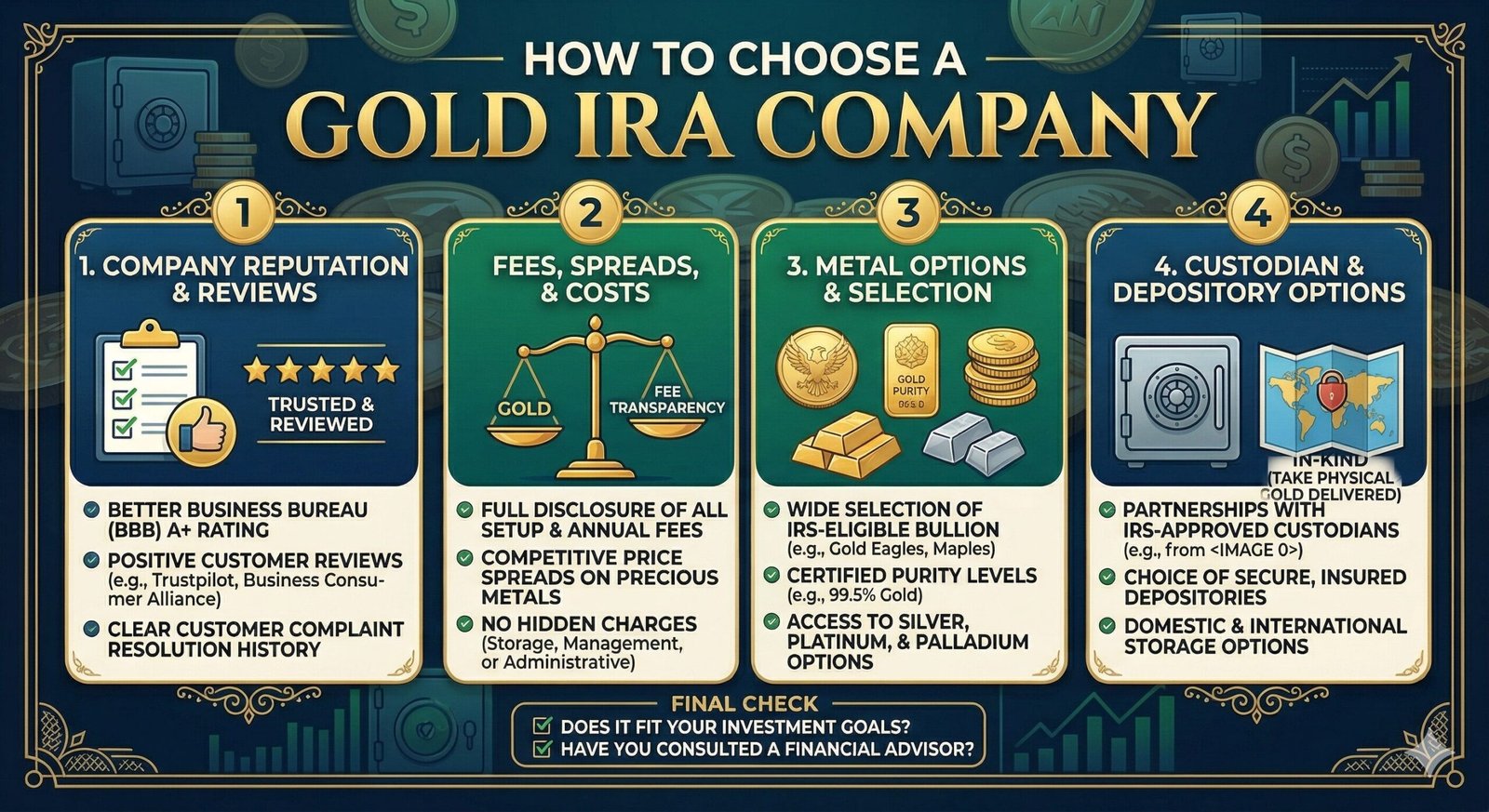
Gold IRAs must comply with IRS precious metals standards, which specify acceptable gold, silver, platinum, and palladium products for retirement account investment. These standards typically require minimum purity levels and approved coin or bar products from recognized mints and refineries.
Storage requirements mandate that precious metals held in IRAs must remain in IRS-approved depositories rather than personal possession. This means your Gold IRA custodian will arrange secure storage with qualified third-party facilities that specialize in precious metals custody for retirement accounts.
Understanding Gold IRA fees becomes essential when evaluating rollover decisions. These accounts typically involve setup fees, annual administrative fees, storage fees, and potential transaction fees for buying and selling precious metals. Comparing these costs against TSP’s notably low expense ratios helps inform rollover decisions.
Required minimum distributions (RMDs) apply to Gold IRAs just as they do to traditional retirement accounts, beginning at age 73. However, calculating RMDs for precious metals accounts can involve additional complexity, as account values fluctuate with precious metals prices and annual valuations are required.
TSP vs Gold IRA Comparison
Alternative Strategies and Partial Transfers
Federal employees don’t necessarily need to choose between maintaining their TSP or rolling everything to a Gold IRA. Partial transfers allow you to move some funds while keeping others in the TSP system, potentially capturing benefits from both account types.
The TSP’s loan program represents one advantage that disappears with rollovers. Current federal employees can borrow from their TSP accounts for various purposes, though outstanding loans typically must be repaid before rollovers can be processed.
Some federal employees consider maintaining their TSP accounts until retirement age, then evaluating rollover options based on their specific financial circumstances and market conditions at that time. This approach preserves TSP benefits while keeping future options open.
Military members transitioning to federal civilian service may have opportunities to maintain TSP participation in their new roles, potentially making immediate rollovers less necessary depending on their career plans and retirement timeline.
Common Challenges and Solutions
Documentation requirements for TSP rollovers can be more complex than standard employer plan transfers. The TSP requires specific forms, notarization in some cases, and particular language in rollover instructions that must be followed precisely to avoid processing delays.
Beneficiary designations require updating when rolling TSP funds to Gold IRAs, as the receiving account operates under different rules for inheritance and distribution. Ensuring proper beneficiary documentation prevents potential complications for your heirs.
Account consolidation becomes relevant for federal employees who may have multiple retirement accounts from previous employers in addition to their TSP. Coordinating rollovers and transfers across multiple accounts requires careful planning to optimize tax treatment and administrative efficiency.
Communication timing between TSP administrators and Gold IRA custodians sometimes creates coordination challenges. Working with experienced Gold IRA providers who understand TSP rollover procedures can help minimize these administrative complications.
Making Informed Decisions
Before proceeding with any TSP to Gold IRA rollover, consider consulting with financial and tax professionals who understand federal employee retirement benefits and precious metals investing regulations. The unique aspects of federal employment benefits and TSP rules warrant specialized knowledge for optimal decision-making.
Evaluating your complete retirement picture, including Social Security benefits, federal pensions, and other retirement accounts, provides context for TSP rollover decisions. The TSP’s role within your broader retirement strategy influences whether rollovers align with your long-term financial goals.
Understanding the irreversible nature of most rollover decisions emphasizes the importance of thorough evaluation before proceeding. Once TSP funds are rolled to external accounts, you typically cannot return them to the TSP system, even if you remain in federal employment or return to federal service later.
For federal employees interested in precious metals exposure without full TSP rollovers, consider that some investment options within the TSP’s fund lineup may provide indirect precious metals exposure through diversified holdings, though these don’t offer the direct ownership that characterizes Gold IRAs.
If you’re exploring retirement account options beyond traditional TSP investments, our guide to the Best Gold IRA Companies of 2026 can help you evaluate providers and understand the gold IRA landscape more thoroughly.
Frequently Asked Questions
Can current federal employees roll their TSP to a Gold IRA?
Current federal employees under age 59½ generally cannot withdraw TSP funds while still employed, which means they typically cannot execute rollovers until separation from service. Employees who reach age 59½ may have limited in-service withdrawal options, but these come with restrictions and may not include all account funds.
How long does a TSP to Gold IRA rollover take?
TSP withdrawal processing typically takes 2-4 weeks from the time they receive completed forms, though processing times can extend longer during peak periods. Once the TSP releases funds, the receiving Gold IRA custodian usually needs additional time to establish the account and complete precious metals purchases.
Are there penalties for rolling TSP funds to a Gold IRA?
Properly executed direct rollovers generally avoid penalties and taxes. However, indirect rollovers trigger 20% tax withholding that must be made up from other sources to complete the full rollover within 60 days. Early withdrawal penalties may apply if you’re under age 59½ and don’t meet specific exception criteria.
Can I roll both traditional and Roth TSP funds to a Gold IRA?
Yes, but traditional and Roth funds must be rolled to separate Gold IRA accounts to maintain their distinct tax treatment. Traditional TSP funds go to traditional Gold IRAs, while Roth TSP funds go to Roth Gold IRAs. Many federal employees have both types due to the TSP’s matching contribution structure.
What happens to my TSP account after I roll it to a Gold IRA?
Complete rollovers close your TSP account entirely, while partial rollovers leave remaining funds in the TSP system. Once funds are rolled to external accounts, you typically cannot return them to the TSP, even if you continue federal employment or return to federal service later.
This article is for informational purposes only and does not constitute financial or tax advice. Investing in precious metals involves risk including possible loss of principal.
Related guides
- Gold IRA Consumer Affairs Reviews: What to Look For
- Gold IRA Trustpilot Reviews: What Real Customers Say
- Gold IRA BBB Complaints: What Consumer Reports Reveal
- Is a Gold IRA Worth the Fees? A Cost-Benefit Analysis
- Are Gold IRA Fees Too High? Breaking Down the Real Costs
- Gold IRA Mistakes to Avoid: 10 Common Errors Investors Make