
Gold IRA Storage Rules: Approved Depositories Explained
When you invest in a Gold Individual Retirement Account, understanding the storage requirements isn’t optional—it’s mandatory. The Internal Revenue Service has established strict Gold IRA storage rules that dictate exactly where and how your precious metals must be held. Violating these rules can result in immediate tax consequences and potential penalties that could devastate your retirement savings.
Unlike traditional IRAs that hold paper assets in brokerage accounts, Gold IRAs require physical storage of actual precious metals. This fundamental difference creates a complex regulatory framework that every Gold IRA investor must navigate carefully. The rules aren’t merely suggestions; they’re federal requirements with serious financial consequences for non-compliance.
Understanding IRS Storage Requirements for Gold IRAs
The foundation of Gold IRA storage rules stems from Internal Revenue Code Section 408, which governs Individual Retirement Accounts. According to IRS Publication 590-A, precious metals held in an IRA must be stored by a qualified trustee or custodian in an approved depository. The IRA owner cannot take physical possession of the metals while maintaining their tax-advantaged status.
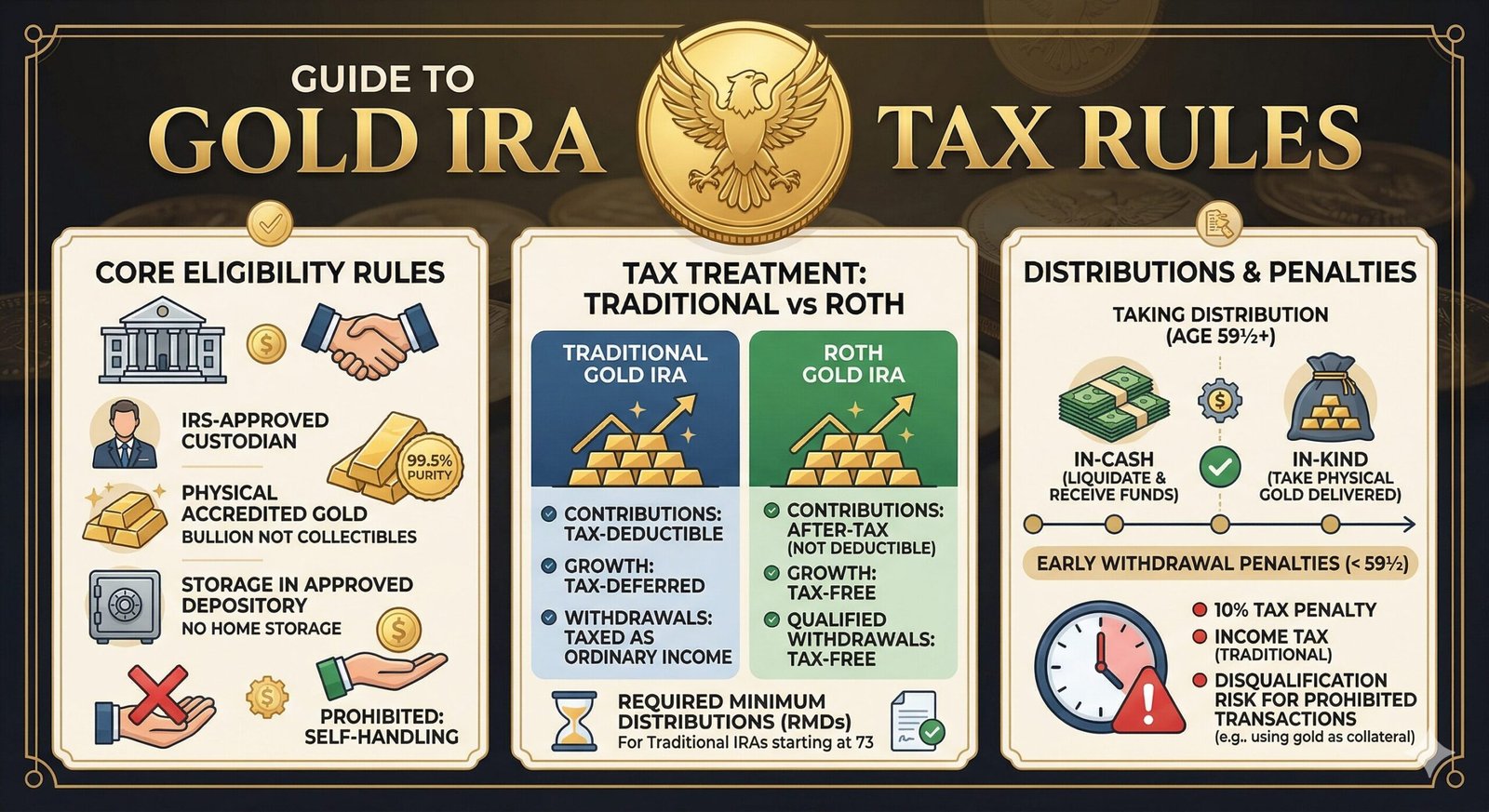
This requirement exists to maintain the integrity of the retirement account structure. The moment you take personal possession of your Gold IRA metals, the IRS considers it a distribution, triggering immediate tax obligations and potential early withdrawal penalties if you’re under age 59½.
The storage rules apply to all precious metals eligible for IRA investment, including gold coins and bars, silver, platinum, and palladium that meet IRS fineness requirements. Each metal must meet specific purity standards: gold must be 99.5% pure, silver 99.9% pure, and platinum and palladium 99.95% pure.
Your Gold IRA custodian bears the responsibility for ensuring compliance with these storage requirements. However, as the account owner, you should understand these rules to make informed decisions and avoid costly mistakes. The custodian cannot authorize home storage or any arrangement that gives you direct access to the metals.
Approved Depository Requirements and Standards
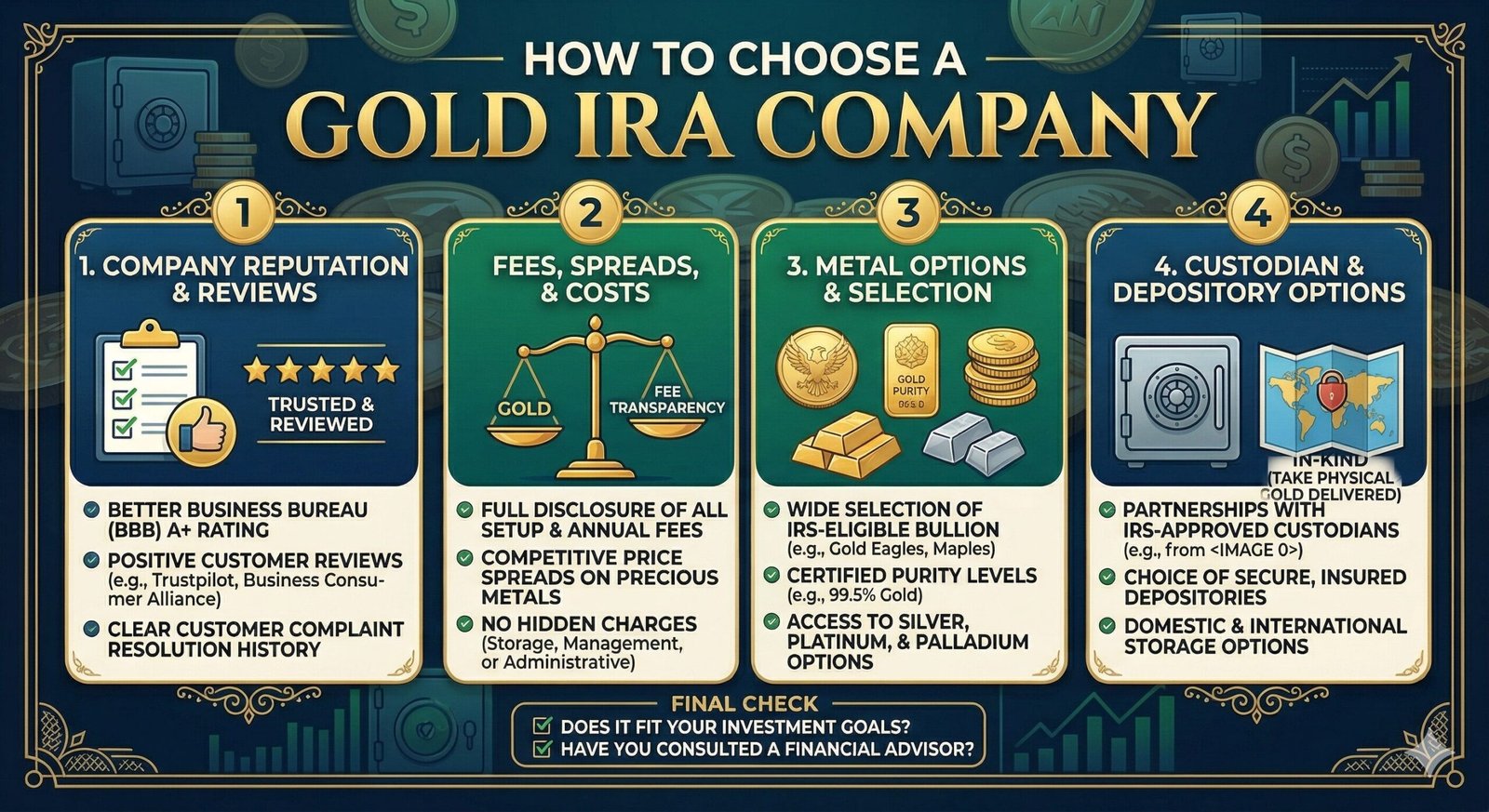
Not every storage facility qualifies to hold Gold IRA assets. The IRS requires that precious metals be stored in facilities that meet stringent security, insurance, and operational standards. These approved depositories must carry comprehensive insurance coverage, maintain 24-hour security systems, and undergo regular audits to verify their procedures and inventory accuracy.
Approved depositories typically fall into two categories: segregated storage and non-segregated (commingled) storage. Segregated storage means your specific metals are kept separate from other investors’ assets, often in individually allocated storage areas or safety deposit boxes. Non-segregated storage pools your metals with those of other investors of the same type and quality.
The choice between segregated and non-segregated storage affects both cost and peace of mind. Segregated storage typically costs more but provides additional assurance that your specific metals remain separate and identifiable. Non-segregated storage costs less but means your metals are pooled with identical metals from other investors.
Major approved depositories include Delaware Depository, Brink’s, and International Depository Services, among others. These facilities maintain locations across the United States, allowing investors some geographic choice in where their metals are stored. Each facility operates under strict protocols for receiving, storing, and releasing precious metals.
The depository must provide regular statements showing your holdings, and you have the right to audit your account. Some investors choose to visit their depository to verify their holdings, though this requires coordination with both the custodian and the storage facility.
What You Can and Cannot Do with Stored Gold IRA Assets
Gold IRA storage rules create clear boundaries around what actions you can take regarding your stored precious metals. Understanding these limitations prevents costly compliance violations and helps you make informed decisions about your retirement assets.
You cannot take physical possession of your Gold IRA metals for any reason while maintaining their tax-advantaged status. This prohibition extends to temporary possession, such as taking metals home for inspection or safekeeping during travel. Even brief possession triggers IRS distribution rules.
However, you do retain certain rights regarding your stored metals. You can direct your custodian to sell specific portions of your holdings, and you can choose replacement metals when making new purchases. You can also request detailed inventory reports and, in some cases, arrange supervised visits to view your holdings at the depository.
The rules also govern how metals can be moved between approved depositories. Such transfers must be arranged through your custodian and involve direct facility-to-facility transport. You cannot serve as an intermediary in moving metals between storage locations.
When you reach age 73, required minimum distributions apply to your Gold IRA just as they do to traditional IRAs. However, instead of receiving the metals directly, you typically must sell a portion of your holdings and receive cash distributions. This requirement affects how you might plan your precious metals allocation as you approach retirement age.
Emergency situations don’t create exceptions to storage rules. Natural disasters, family emergencies, or financial hardships don’t authorize temporary possession of your Gold IRA metals. The IRS provides no hardship exceptions to the storage requirements.
Storage Fees and Cost Considerations
Gold IRA storage involves multiple fee structures that investors must understand when calculating the total cost of precious metals ownership. These fees vary significantly between custodians and depositories, making careful comparison essential for cost-effective investing.
Annual storage fees typically range from $100 to $300 per year, depending on the value of your holdings and whether you choose segregated or non-segregated storage. Segregated storage commands premium pricing due to the additional space and administrative requirements involved in maintaining separate, identifiable holdings.
Setup fees for new Gold IRA storage arrangements commonly range from $50 to $150. These one-time charges cover the administrative work required to establish your account at the approved depository and coordinate the initial transfer of your metals.
Insurance costs are typically built into storage fees, but understanding coverage limits remains important. Most depositories carry insurance well into the hundreds of millions of dollars, providing coverage against theft, natural disasters, and other catastrophic losses.
Transaction fees apply when you buy or sell metals within your Gold IRA. These fees cover the costs of transporting metals to or from the depository and the administrative work involved in updating your account records. Transaction fees typically range from $25 to $50 per occurrence.
Some custodians offer scaled fee structures based on account value, potentially reducing costs for larger Gold IRA holdings. Understanding these fee structures helps you budget accurately for the ongoing costs of precious metals ownership within your retirement account.
Consequences of Violating Storage Rules
Breaking Gold IRA storage rules triggers immediate and severe tax consequences that can significantly impact your retirement savings. The IRS treats any violation of storage requirements as a distribution from your IRA, subject to ordinary income tax rates and potential penalties.
If you take possession of your Gold IRA metals, even temporarily, the entire value of those metals becomes taxable income in the year of the violation. For investors under age 59½, an additional 10% early withdrawal penalty applies to the distributed amount. This penalty can quickly erode the value of your precious metals investment.
The tax impact compounds when you consider that precious metals distributions are valued at current market prices, not your original purchase price. If your metals have appreciated significantly, you could face substantial tax liability on gains you haven’t actually realized through a sale.
Beyond immediate tax consequences, storage rule violations can jeopardize the tax-advantaged status of your entire Gold IRA. In severe cases, the IRS might determine that your account no longer qualifies as a retirement account, triggering taxation of all assets within the IRA.
Common violations include home storage arrangements, safety deposit box storage in your name, and taking temporary possession during transfers between custodians. Some investors mistakenly believe they can store metals at home if they report the holdings correctly, but no reporting mechanism legitimizes prohibited storage arrangements.
The IRS provides no grace period or correction mechanism for storage violations. Once you take possession of metals outside approved storage, the distribution is considered complete and irreversible for tax purposes. You cannot “undo” the violation by returning metals to approved storage.
Professional tax preparation becomes essential if you’ve violated storage rules, as the reporting requirements for IRA distributions involve multiple forms and calculations. The complexity of unwinding storage violations often requires specialized tax expertise to minimize the financial damage.
Choosing Between Storage Options and Providers
Selecting appropriate storage for your Gold IRA involves evaluating multiple factors beyond simple cost comparison. The decision affects not only your ongoing expenses but also your peace of mind and access to your precious metals throughout your ownership period.
Geographic location plays a role in storage selection, though it shouldn’t be the primary factor. Some investors prefer storage facilities in states with favorable precious metals policies, while others prioritize proximity to their residence for potential visits or emergencies. However, remember that you cannot take possession of metals regardless of storage location.
The reputation and track record of storage providers matter significantly for long-term precious metals storage. Research facilities’ insurance coverage, security protocols, and history of regulatory compliance. FINRA’s guidance on self-directed IRAs emphasizes the importance of due diligence when selecting service providers for alternative investments.
Segregated versus non-segregated storage represents a fundamental choice affecting both cost and asset management. Segregated storage provides peace of mind through individual identification of your specific metals, while non-segregated storage offers cost savings through pooled storage arrangements. Neither option affects the tax treatment of your Gold IRA.
Technology and reporting capabilities vary among storage providers. Modern facilities offer online account access, real-time inventory tracking, and detailed reporting systems. These technological capabilities can enhance your ability to monitor and manage your precious metals holdings effectively.
The relationship between your Gold IRA custodian and storage provider affects the smoothness of transactions and account management. Some custodians have preferred relationships with specific depositories, potentially streamlining processes and reducing costs. However, you’re not required to use your custodian’s preferred storage facility.
Customer service quality becomes important for long-term storage relationships. Consider the responsiveness of storage providers to inquiries, their ability to provide detailed account information, and their procedures for handling special requests or concerns.
Understanding our complete Gold IRA guide provides additional context for making informed storage decisions. The storage component represents just one aspect of successful Gold IRA management, but it’s a critical component that affects your entire precious metals investment experience.
Transferring Gold IRA Assets Between Storage Facilities
Sometimes circumstances require moving your Gold IRA assets from one approved storage facility to another. Understanding the proper procedures for these transfers prevents compliance violations and ensures your metals maintain their tax-advantaged status throughout the process.
All transfers between storage facilities must be arranged through your Gold IRA custodian, never directly between you and the storage providers. The custodian coordinates with both the sending and receiving facilities to ensure proper chain of custody and documentation. You cannot personally transport metals between facilities, even if both locations are approved depositories.
Direct facility-to-facility transfers represent the safest method for moving Gold IRA assets. This process involves professional transport companies that specialize in precious metals shipments and carry appropriate insurance coverage. The metals never leave the custody of approved parties during the transfer process.
Documentation requirements for storage transfers include detailed inventory lists, insurance certificates, and custody transfer forms. Your custodian handles most paperwork, but you should review transfer documentation to verify accuracy of your holdings and ensure all metals are properly accounted for during the move.
Transfer costs vary depending on the distance between facilities, the value and volume of metals being moved, and the specific requirements of each storage provider. These costs typically range from $100 to $500 per transfer, depending on the complexity and value of the shipment.
Timing considerations affect storage transfers, as the process typically requires several days to complete. During transit, your metals remain in professional custody but may not be immediately accessible for transactions. Plan transfers accordingly if you anticipate needing to sell metals during the transfer period.
Some investors choose to transfer storage facilities when changing Gold IRA custodians, consolidating accounts, or seeking better storage terms. However, transfers should be made for substantive reasons rather than minor differences in fees or services, given the costs and complexity involved.
Maintaining Compliance Over Time
Gold IRA storage compliance isn’t a one-time consideration but an ongoing responsibility that extends throughout your ownership period. Regular monitoring and periodic review of your storage arrangements help ensure continued compliance and optimal management of your precious metals holdings.
Annual account reviews should include verification of storage facility credentials, insurance coverage, and compliance with current IRS regulations. Storage requirements can evolve, and facilities must maintain their approved status through ongoing compliance with federal standards.
Your Gold IRA custodian should provide regular statements showing your stored holdings, storage location, and any transactions affecting your account. Review these statements carefully to verify accuracy and identify any discrepancies that require attention or correction.
Changes in your personal circumstances may affect your storage needs or preferences. Moving to a different geographic region, changes in account value, or evolving investment objectives might warrant consideration of different storage options within the approved framework.
Staying informed about IRS rule changes and storage facility updates helps you maintain compliance and make informed decisions about your precious metals holdings. Subscribe to custodian newsletters, review IRS publications, and consult with qualified professionals when questions arise about storage requirements.
Record keeping becomes especially important for Gold IRA storage, as you should maintain documentation of all storage-related transactions, transfers, and communications with custodians and facilities. These records support accurate tax reporting and help resolve any future questions about your account history.
Regular communication with your custodian ensures you understand current storage policies and any changes that might affect your account. Don’t hesitate to ask questions about storage procedures, fee changes, or new regulatory requirements that might impact your Gold IRA holdings.
Understanding Gold IRA rollover rules becomes important as you manage your retirement accounts over time. Changes in employment, retirement timing, or investment strategy may require account rollovers that involve storage considerations and compliance requirements.
FAQ
Can I store my Gold IRA metals at home or in a personal safety deposit box?
No, IRS regulations require Gold IRA metals to be stored at approved depositories by qualified custodians. Home storage or personal safety deposit boxes are prohibited and will trigger immediate tax consequences and penalties. The metals must remain in the custody of approved third-party storage facilities throughout your ownership period.
What’s the difference between segregated and non-segregated storage for Gold IRAs?
Segregated storage keeps your specific precious metals separate from other investors’ assets, often in individually allocated areas. Non-segregated storage pools your metals with identical metals from other investors. Segregated storage typically costs more but provides additional peace of mind, while non-segregated storage offers cost savings without affecting the tax treatment of your Gold IRA.
How much do Gold IRA storage fees typically cost?
Annual storage fees generally range from $100 to $300 per year, with segregated storage commanding higher fees. Additional costs include setup fees of $50-$150, transaction fees of $25-$50 per buy/sell order, and wire transfer fees of $25-$35. The total storage cost depends on your account value, storage type, and frequency of transactions.
What happens if I accidentally violate Gold IRA storage rules?
Any violation of storage rules triggers immediate tax consequences, with the IRS treating the violation as a distribution from your IRA. You’ll owe ordinary income tax on the value of the metals, plus a 10% early withdrawal penalty if you’re under age 59½. There’s no grace period or correction mechanism—once violated, the tax consequences are immediate and irreversible.
Can I visit the storage facility to see my Gold IRA metals?
Many approved depositories allow supervised visits to view your stored metals, though this requires coordination between you, your custodian, and the storage facility. You cannot take possession of the metals during these visits, but you can verify their condition and confirm your holdings. Contact your custodian to arrange such visits according to the facility’s policies and procedures.
Ready to explore your Gold IRA options with reputable custodians and storage providers? Visit our comprehensive guide to the Best Gold IRA Companies of 2026 to compare leading providers and find the right fit for your retirement investment strategy.
This article is for informational purposes only and does not constitute financial or tax advice. Investing in precious metals involves risk including possible loss of principal.
Related guides
- Gold IRA Consumer Affairs Reviews: What to Look For
- Gold IRA Trustpilot Reviews: What Real Customers Say
- Gold IRA BBB Complaints: What Consumer Reports Reveal
- Is a Gold IRA Worth the Fees? A Cost-Benefit Analysis
- Are Gold IRA Fees Too High? Breaking Down the Real Costs
- Gold IRA Mistakes to Avoid: 10 Common Errors Investors Make