
What Is a Gold IRA Custodian and What Do They Do?
When considering precious metals for retirement investing, understanding the role of a Gold IRA custodian is essential. These specialized financial institutions serve as the backbone of self-directed precious metals retirement accounts, handling everything from account administration to regulatory compliance. For retirement investors exploring alternatives to traditional paper assets, knowing how custodians operate can make the difference between a smooth investment experience and costly complications.
A Gold IRA custodian is a qualified financial institution that holds and administers precious metals within an Individual Retirement Account structure. Unlike traditional IRA custodians that primarily handle stocks, bonds, and mutual funds, these specialized entities manage physical gold, silver, platinum, and palladium investments according to strict IRS regulations. They serve as the intermediary between you and your precious metals investments, ensuring everything operates within legal parameters.
Understanding the Custodian’s Core Responsibilities
Gold IRA custodians perform numerous critical functions that extend far beyond simple asset storage. Their primary responsibility involves maintaining accurate records of all account activities, from initial contributions to distributions and required minimum withdrawals. This recordkeeping includes tracking purchase dates, metal specifications, storage locations, and transaction histories that satisfy IRS reporting requirements.
Account administration represents another crucial function. Custodians process contribution deposits, coordinate precious metals purchases through approved dealers, and handle distribution requests when account holders reach retirement age. They also manage the complex paperwork associated with 401(k) to Gold IRA rollover guide transactions, ensuring transfers comply with Gold IRA rollover rules.
The custodian coordinates with approved precious metals dealers and secure storage facilities, though they typically don’t store metals directly. Instead, they work with specialized depositories that meet IRS requirements for precious metals storage. This arrangement ensures your gold and silver remain segregated from other investors’ holdings while maintaining the security standards mandated by federal regulations.
Regulatory Compliance and IRS Requirements
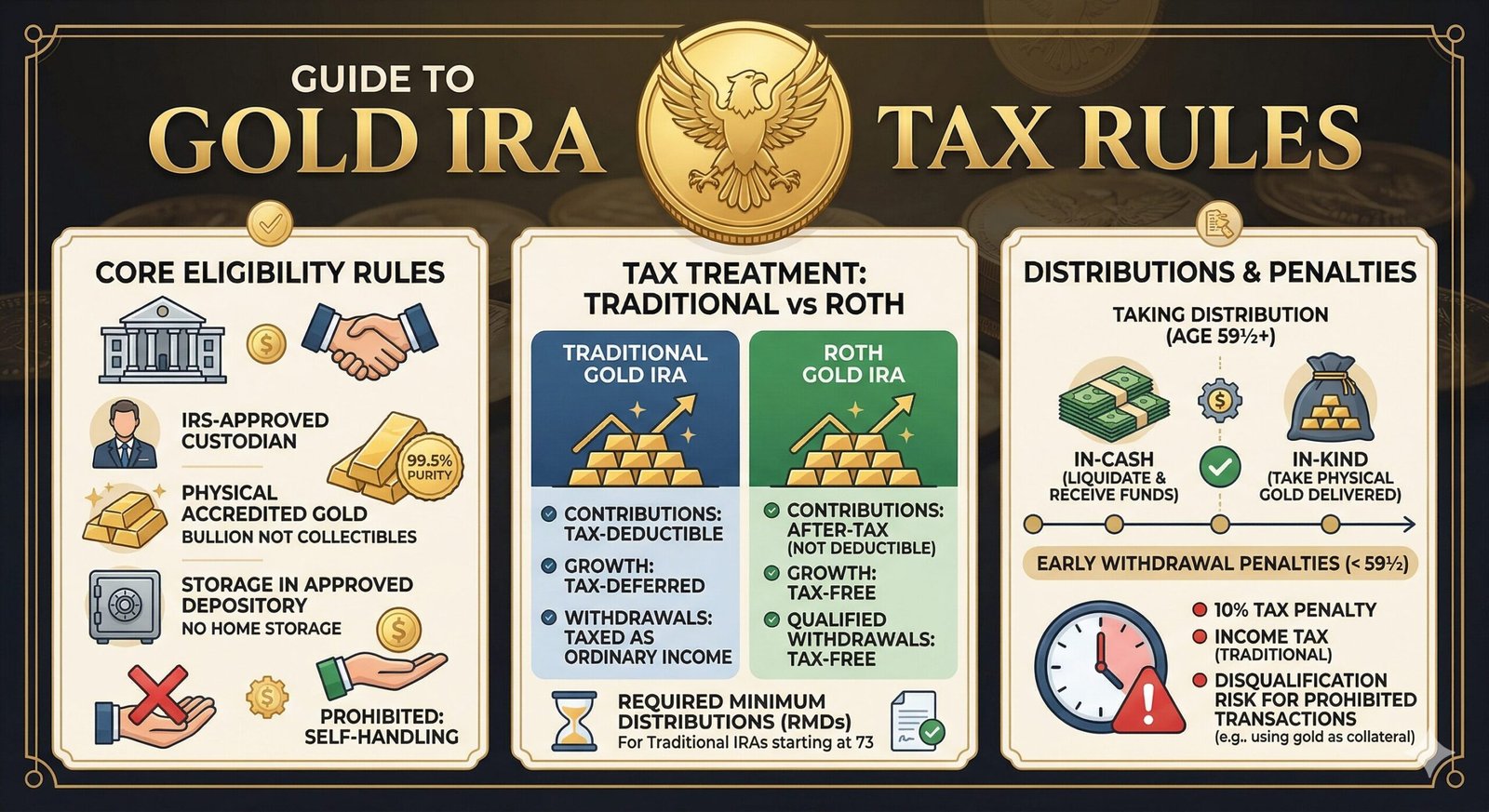
IRS regulations governing precious metals IRAs are notably complex, and custodians must navigate these rules meticulously. According to IRS Publication 590-A, precious metals held in retirement accounts must meet specific purity standards and be stored in approved depositories. Custodians ensure all metals purchased meet these standards and coordinate proper storage arrangements.
The custodian also handles annual reporting requirements, submitting Form 5498 to report contributions and fair market values of account assets. They maintain documentation proving metals meet IRA eligibility requirements and coordinate with depositories to ensure proper segregation and insurance coverage. When required minimum distributions begin, custodians calculate withdrawal amounts and coordinate either in-kind distributions of metals or liquidation sales.
Tax compliance represents another critical area where custodians provide essential services. While they don’t provide tax advice, they maintain records necessary for tax reporting and coordinate with account holders’ tax professionals when needed. This includes tracking cost basis information and providing documentation for potential IRA investment FAQ compliance.
Types of Gold IRA Custodians
Several types of financial institutions can serve as Gold IRA custodians, each offering different service levels and fee structures. Traditional banks and trust companies represent one category, often providing precious metals services alongside their conventional IRA offerings. These institutions typically offer established infrastructure and regulatory experience, though their precious metals expertise may be limited.
Specialized precious metals custodians focus exclusively on alternative asset IRAs, including precious metals, real estate, and private investments. These custodians often provide more comprehensive precious metals knowledge and streamlined processes specifically designed for Gold IRAs. They typically maintain established relationships with reputable dealers and depositories, potentially simplifying the investment process.
Some brokerage firms also offer self-directed IRA services that include precious metals investing. However, not all brokerages provide this service, and those that do may have limited precious metals expertise compared to specialized custodians. The FINRA’s guidance on self-directed IRAs provides additional context on these arrangements.
Fee Structures and Cost Considerations
Gold IRA custodians typically charge various fees that can significantly impact long-term investment returns. Understanding these costs upfront helps investors make informed decisions about which custodian offers the best value for their specific situation. Our detailed Gold IRA fees guide provides comprehensive information about typical cost structures.
Annual custodial fees represent the most common charge, typically ranging from $75 to $300 per year depending on account size and service level. Some custodians charge flat fees regardless of account value, while others use tiered structures that increase with larger account balances. Setup fees for new accounts range from zero to several hundred dollars, often depending on the custodian’s business model and target market.
Transaction fees apply to each precious metals purchase, typically ranging from $25 to $50 per transaction. Some custodians waive these fees for larger purchases or accounts above certain thresholds. Storage fees, while technically paid to depositories, are often collected by custodians and passed through to storage facilities.
Selecting the Right Gold IRA Custodian
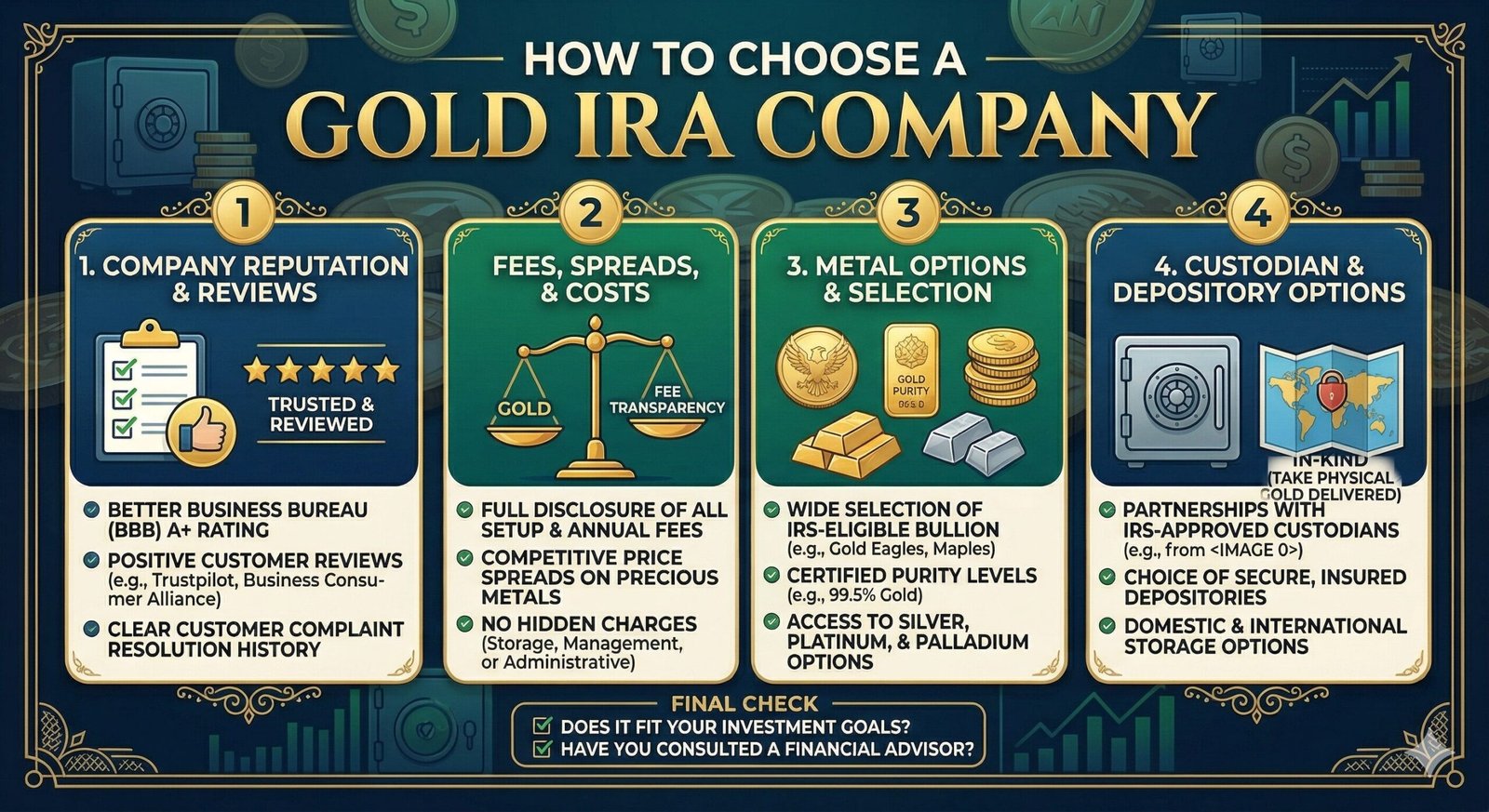
Choosing an appropriate custodian requires careful evaluation of multiple factors beyond just fee structures. Experience with precious metals IRAs represents a crucial consideration, as custodians with extensive alternative asset experience typically navigate regulatory requirements more efficiently and provide better customer service for complex situations.
Regulatory standing and financial stability are equally important. Prospective account holders should verify custodians maintain proper licensing and registration with relevant authorities. The FINRA BrokerCheck database provides information about broker-dealers, while state banking departments typically oversee trust companies and banks offering custodial services.
Technology platforms and account access capabilities vary significantly among custodians. Some offer sophisticated online portals with real-time account values and transaction histories, while others rely on phone-based service models. Consider your preferences for account monitoring and transaction processing when evaluating custodian options.
Customer service quality can significantly impact the investment experience, particularly during account setup and rollover processes. Research custodian reviews and ratings on bbb.org and other review platforms, paying attention to complaint patterns and resolution approaches. Custodians specializing in precious metals often provide more knowledgeable support for specific questions about IRA-eligible gold coins and storage options.
The Relationship Between Custodians, Dealers, and Depositories
Gold IRA custodians operate within a network of specialized service providers, each playing distinct roles in the precious metals investment process. Understanding these relationships helps investors navigate the system more effectively and identify potential conflicts of interest or coordination issues.
Precious metals dealers handle the actual purchase and sale of gold, silver, platinum, and palladium coins and bars. Custodians typically maintain relationships with multiple approved dealers, though some may have exclusive arrangements or receive compensation for directing business to specific dealers. This arrangement can impact pricing and product selection, making dealer relationships an important consideration when choosing custodians.
Depositories provide secure storage for precious metals held in IRAs. These specialized facilities meet strict IRS requirements for segregation, insurance, and security. Custodians coordinate with depositories to ensure proper storage arrangements and may influence where metals are stored based on their existing relationships and fee arrangements.
Some custodians operate as part of larger precious metals companies that may include dealer and storage services. While this integration can provide streamlined service, it may also create potential conflicts of interest regarding pricing and product recommendations. Understanding these relationships helps investors make informed decisions about their custodian selection.
Common Custodian Services and Limitations
Beyond basic account administration, many Gold IRA custodians offer additional services that can enhance the investment experience. Some provide educational resources about precious metals investing, market updates, and regulatory changes that might affect account holders. Others offer online account portals with features like real-time precious metals pricing and portfolio tracking capabilities.
However, custodians also have important limitations that investors should understand. They cannot provide investment advice about which precious metals to purchase or when to buy or sell. Their role remains strictly administrative, focused on account compliance and recordkeeping rather than investment guidance. This limitation means investors must conduct their own research or work with qualified financial advisors for investment decisions.
Custodians also cannot guarantee the performance of precious metals investments or provide predictions about future price movements. Past performance is not a guarantee of future results, and custodians must remain neutral regarding investment outcomes. They focus solely on facilitating transactions and maintaining regulatory compliance within the existing Gold IRA hub framework.
Due Diligence and Red Flags
When evaluating potential Gold IRA custodians, several warning signs should prompt additional scrutiny or reconsideration. Custodians that make promises about investment performance or guarantee specific returns are operating outside their proper scope and may not understand regulatory requirements. Similarly, those that pressure investors toward specific precious metals products or dealers may have conflicts of interest.
Unusually low fees might indicate hidden costs or substandard service levels. While competitive pricing benefits investors, fees significantly below market rates may suggest corner-cutting in important areas like customer service, technology infrastructure, or regulatory compliance. Always request complete fee schedules in writing before making commitments.
Lack of proper licensing or registration represents a serious red flag. Legitimate custodians maintain appropriate state and federal registrations and can provide documentation of their regulatory status. Avoid custodians that cannot clearly demonstrate their qualifications or seem evasive about regulatory compliance.
Making the Custodian Decision
Selecting a Gold IRA custodian requires balancing multiple factors including fees, service quality, technology capabilities, and regulatory compliance. Start by creating a list of potential custodians and requesting detailed information about their services, fee structures, and dealer relationships. Compare this information systematically to identify the best fit for your specific needs and investment approach.
Consider your Gold IRA minimum investment requirements when evaluating custodians, as some may have higher account minimums or fee structures that make smaller investments impractical. Similarly, think about your long-term investment timeline and whether you’ll need specific services like frequent transactions or specialized reporting capabilities.
Understanding what a Gold IRA is and how it compares to other retirement account options can help inform your custodian selection. Some investors benefit from custodians that offer multiple alternative investment options, while others prefer specialists focused exclusively on precious metals.
Frequently Asked Questions
What qualifications must a Gold IRA custodian have?
Gold IRA custodians must be banks, trust companies, or other entities approved by the IRS to hold retirement account assets. They need proper state and federal licensing, adequate insurance coverage, and demonstrated capability to handle precious metals transactions in compliance with IRS regulations.
Can I store my Gold IRA metals at home if I have a custodian?
No, IRS regulations require that precious metals held in IRAs be stored at approved depositories. Home storage arrangements disqualify the account from IRA status and create immediate tax consequences. Custodians coordinate with IRS-approved depositories to ensure compliant storage.
How do I transfer my Gold IRA from one custodian to another?
Gold IRA transfers involve coordinating between your current and new custodians to move both account records and physical metals. The process typically takes several weeks and may involve fees from both custodians. Direct custodian-to-custodian transfers avoid potential tax consequences that could result from personal receipt of funds.
Do all Gold IRA custodians work with the same precious metals dealers?
No, custodians maintain different dealer relationships and may offer varying product selections and pricing. Some custodians work with multiple dealers to provide competitive options, while others may have exclusive arrangements. Understanding these relationships helps evaluate potential costs and product availability.
What happens if my Gold IRA custodian goes out of business?
If a custodian ceases operations, your precious metals and account records should transfer to another qualified custodian. The metals remain your property and should be segregated from the custodian’s assets. However, this situation can create delays and complications, making custodian financial stability an important selection criterion.
Choosing the right Gold IRA custodian represents a critical decision that impacts every aspect of your precious metals retirement investing experience. Take time to thoroughly research options, compare services and fees, and verify regulatory compliance before making your selection. For comprehensive information about top-rated precious metals custodians and their services, visit our Best Gold IRA Companies of 2026 guide.
This article is for informational purposes only and does not constitute financial or tax advice. Investing in precious metals involves risk including possible loss of principal.