
Gold IRA in Georgia: Rules, Providers and Storage
Georgia residents exploring retirement investment options increasingly consider precious metals as part of their financial planning. Understanding how Gold IRAs work within Georgia’s regulatory environment helps residents make informed decisions about whether this retirement account type aligns with their goals.
A Gold IRA operates under federal regulations established by the Internal Revenue Service, meaning the core rules remain consistent regardless of your state of residence. However, Georgia residents should understand specific considerations related to storage options, state tax implications, and available service providers when establishing these self-directed retirement accounts.
Understanding Gold IRAs for Georgia Residents
Gold Individual Retirement Accounts function as self-directed IRAs that hold physical precious metals instead of traditional paper assets. The IRS Publication 590-A governs these accounts at the federal level, establishing strict requirements for metal purity, approved coins and bars, and custodial arrangements.
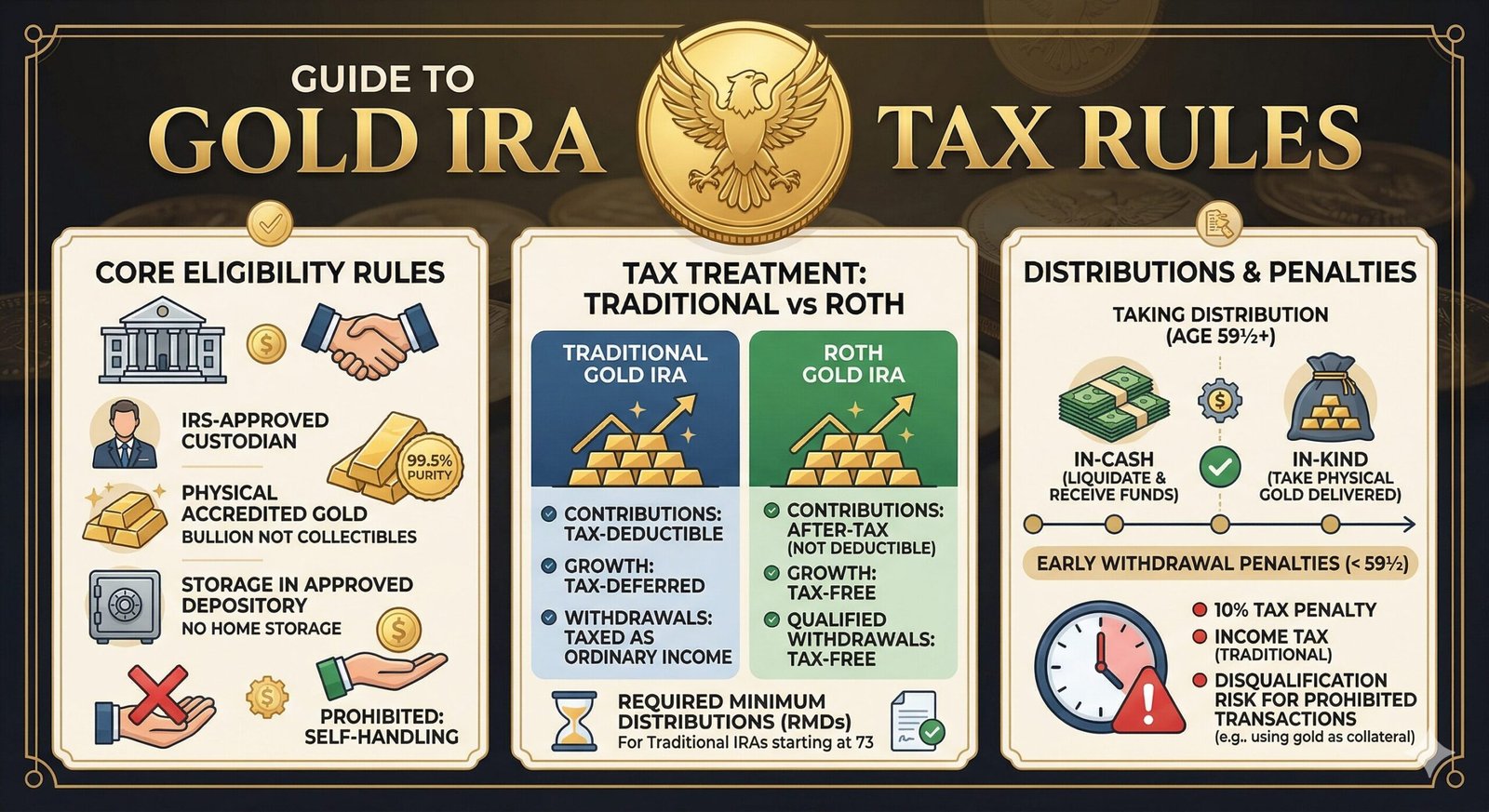
Georgia residents follow the same federal guidelines as investors in other states. This means your Gold IRA must hold only IRS-approved precious metals with specific purity requirements: gold must be 99.5% pure, silver 99.9% pure, platinum 99.95% pure, and palladium 99.95% pure. Popular IRA-eligible gold coins include American Gold Eagles, American Gold Buffalos, and certain foreign coins that meet purity standards.
The account structure requires three key parties: the account holder (you), an IRS-approved custodian, and a secure storage facility. Georgia residents can work with custodians located anywhere in the United States, as physical location doesn’t restrict your choice of service provider for what a Gold IRA is.
Georgia State Tax Considerations
Georgia’s state income tax structure affects how Gold IRA distributions are taxed when you reach retirement age. The state imposes income tax on retirement account distributions, including those from Gold IRAs, following federal tax treatment.
Currently, Georgia taxes retirement income with some provisions for residents over age 62. Understanding these implications becomes important when planning your retirement timeline and distribution strategy. However, this article cannot provide tax advice, and Georgia residents should consult qualified tax professionals for guidance specific to their situations.
Unlike some states that impose additional taxes on precious metals transactions, Georgia doesn’t levy special taxes on Gold IRA rollovers or purchases made within the account. This regulatory approach simplifies the process for Georgia residents establishing these retirement accounts.
Custodial Services Available to Georgia Residents
Georgia residents have access to numerous IRS-approved custodians specializing in self-directed IRAs. These custodians handle the administrative aspects of your account, including record-keeping, reporting, and ensuring compliance with federal regulations.
When evaluating custodians, Georgia residents should consider factors beyond geographic location. Important considerations include fee structures, customer service quality, experience with precious metals IRAs, and integration with reputable storage facilities. Our Gold IRA fees guide explains common cost structures you’ll encounter when comparing providers.
Many established custodians serve clients nationwide, offering identical services regardless of your state of residence. This means Georgia residents can access the same professional custodial services available to investors in other states, expanding your options for finding a provider that matches your preferences and budget requirements.
Storage Requirements and Options
Federal law requires Gold IRA metals to be stored in IRS-approved depositories, not in personal possession. This requirement applies equally to Georgia residents and investors in other states. The metals must remain in the custody of approved storage facilities throughout the life of your IRA.
Several IRS-approved depositories serve clients nationwide, including facilities operated by Delaware Depository, Brinks, and other established companies. These facilities offer segregated storage (where your metals are stored separately) or commingled storage (where your metals are stored with other investors’ holdings but tracked individually).
Georgia residents aren’t limited to storage facilities within the state. In fact, most approved depositories are located in states like Delaware, Texas, and Utah, where specialized precious metals storage infrastructure has developed. The geographic separation between your residence and storage facility doesn’t affect account management or create additional complications.
Storage fees typically range from $100 to $300 annually, depending on the facility and storage method chosen. Some custodians include storage fees in their annual account fees, while others charge separately for storage services.
Account Opening Process for Georgia Residents
Opening a Gold IRA in Georgia follows the same process as other states. The journey typically begins with selecting an IRS-approved custodian that specializes in self-directed retirement accounts. After establishing your account, you’ll need to fund it either through a direct contribution (subject to annual IRA contribution limits) or by transferring funds from an existing retirement account.
The 401(k) to Gold IRA rollover guide explains how Georgia residents can move funds from employer-sponsored plans into Gold IRAs. This process involves direct transfers between custodians to avoid tax penalties, and understanding the Gold IRA rollover rules helps ensure compliance with IRS requirements.
Once your account is funded, you’ll work with your custodian to select IRS-approved precious metals for purchase. The metals are then shipped directly to your chosen storage facility, where they remain until you take distributions or sell them within the account.
Minimum Investment Requirements
Most Gold IRA custodians establish minimum investment thresholds, typically ranging from $10,000 to $50,000 for initial accounts. These minimums exist partly due to the fixed costs associated with account setup, storage, and ongoing administration. Our Gold IRA minimum investment guide provides detailed information about these requirements across different providers.
Georgia residents should consider whether their available investment amount justifies the costs associated with Gold IRA ownership. With annual fees typically ranging from $200 to $500, plus storage costs, smaller accounts may face proportionally higher expense ratios that could impact long-term growth.
Some custodians offer lower minimums for SEP-IRAs or other account types, which might benefit Georgia small business owners or self-employed individuals seeking precious metals exposure in their retirement planning.
Regulatory Compliance and Due Diligence
Georgia residents should verify that any Gold IRA provider they consider maintains proper licensing and registration. The FINRA BrokerCheck system allows you to research broker-dealers, while checking with the Better Business Bureau can provide insight into customer satisfaction and complaint patterns.
Understanding how to avoid Gold IRA scams becomes particularly important as the industry has attracted both legitimate providers and questionable operators. Georgia residents should be wary of high-pressure sales tactics, unrealistic performance claims, or providers who discourage comparison shopping.
The SEC’s investor resources offer additional guidance on retirement account regulations and investor protections that apply regardless of your state of residence.
Comparison of Gold IRA Features for Georgia Residents
Long-term Considerations
Georgia residents planning for retirement should understand that Gold IRAs are subject to the same distribution rules as traditional IRAs. Required minimum distributions begin at age 73, as outlined in the IRS RMD FAQ, and early withdrawals before age 59½ typically incur penalties.
When taking distributions, you can choose to receive physical metals or have the custodian sell metals and distribute cash proceeds. This flexibility allows Georgia residents to adapt their distribution strategy based on personal preferences and market conditions at the time of retirement.
The decision of whether is a Gold IRA a good idea depends on individual circumstances, risk tolerance, and retirement goals. Georgia residents should consider how precious metals might fit within their broader retirement planning strategy, keeping in mind that past performance of gold prices is not a guarantee of future results.
Frequently Asked Questions
Can Georgia residents store Gold IRA metals in a personal safe or bank deposit box?
No, IRS regulations require Gold IRA metals to be stored in approved depositories. Personal storage would disqualify the account and trigger tax penalties and potential early withdrawal penalties.
Are there any special Georgia state requirements for Gold IRAs?
Georgia doesn’t impose additional requirements beyond federal IRS regulations. However, the state does tax retirement account distributions, so consider state tax implications when planning distributions.
How do I transfer an existing IRA to a Gold IRA in Georgia?
The process involves opening a Gold IRA with an approved custodian, then requesting a direct trustee-to-trustee transfer from your current IRA provider. This method avoids tax implications and withdrawal penalties.
What happens to my Gold IRA if I move from Georgia to another state?
Your Gold IRA remains unchanged if you relocate. Since these accounts operate under federal regulations, moving to another state doesn’t affect your account structure, custodian, or storage arrangements.
Can I take physical possession of Gold IRA metals while living in Georgia?
Taking physical possession would be considered a distribution, subject to income taxes and potential early withdrawal penalties if you’re under age 59½. The metals must remain in approved storage to maintain IRA status.
Georgia residents interested in exploring precious metals for retirement planning can research their options through our comprehensive guide to the Best Gold IRA Companies of 2026. This resource provides detailed comparisons of providers, helping you evaluate which companies might align with your investment goals and service preferences.
This article is for informational purposes only and does not constitute financial or tax advice. Investing in precious metals involves risk including possible loss of principal.
Related guides
- Gold IRA Consumer Affairs Reviews: What to Look For
- Gold IRA Trustpilot Reviews: What Real Customers Say
- Gold IRA BBB Complaints: What Consumer Reports Reveal
- Is a Gold IRA Worth the Fees? A Cost-Benefit Analysis
- Are Gold IRA Fees Too High? Breaking Down the Real Costs
- Gold IRA Mistakes to Avoid: 10 Common Errors Investors Make