
Gold IRA FAQ: 20 Most Common Questions Answered
Self-directed Individual Retirement Accounts that hold precious metals have grown in popularity among retirement investors seeking to expand their portfolio options beyond traditional paper assets. However, the unique characteristics of these accounts often raise questions about eligibility, costs, storage requirements, and tax implications.
This comprehensive guide addresses the most frequently asked questions about Gold IRAs, providing clear answers to help you understand how these accounts work and whether they might fit your retirement planning goals.
Understanding Gold IRA Basics
What Exactly Is a Gold IRA?
A Gold IRA is a self-directed Individual Retirement Account that allows you to hold IRS-approved precious metals as part of your retirement savings. Unlike traditional or Roth IRAs that typically hold stocks, bonds, and mutual funds, a Gold IRA can contain physical gold, silver, platinum, and palladium coins and bars that meet specific purity requirements.
The account functions like any other IRA in terms of contribution limits, tax treatment, and distribution rules. The key difference lies in the assets held within the account. According to the IRS Publication 590-A, self-directed IRAs must follow the same fundamental rules as traditional retirement accounts while allowing for alternative investments.
For a detailed explanation of how these accounts operate, refer to our Gold IRAs Explained in Detail guide.
Who Is Eligible to Open a Gold IRA?
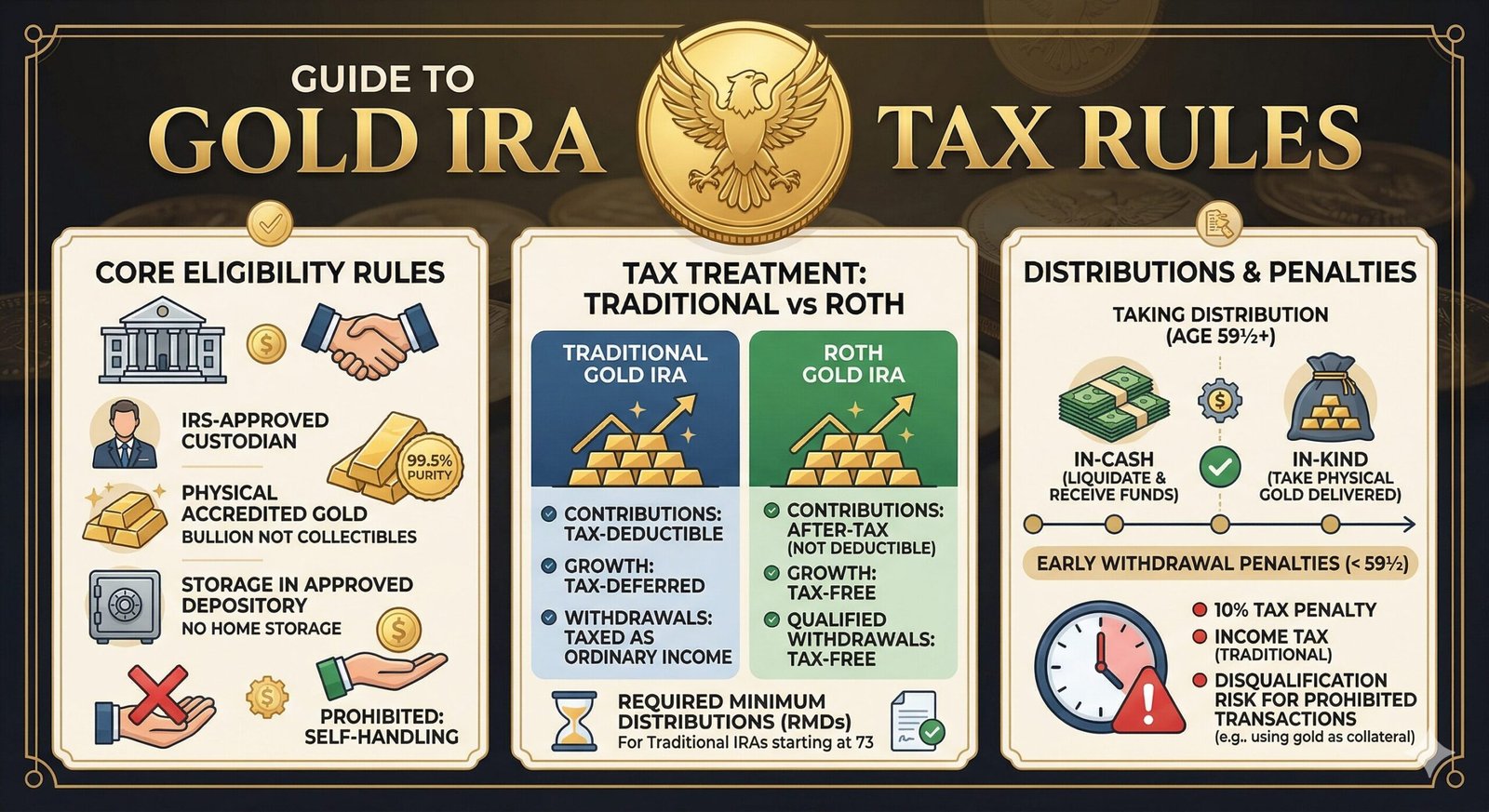
Eligibility for a Gold IRA follows the same rules as traditional and Roth IRAs. For traditional Gold IRAs, you must have earned income and be under age 73. Roth Gold IRAs require earned income but have no age restrictions for contributions, though income limits may apply.
Married couples filing jointly face different income thresholds than single filers. The IRS contribution limits are updated annually and apply to all IRA types, including Gold IRAs.
What Types of Precious Metals Can I Hold?
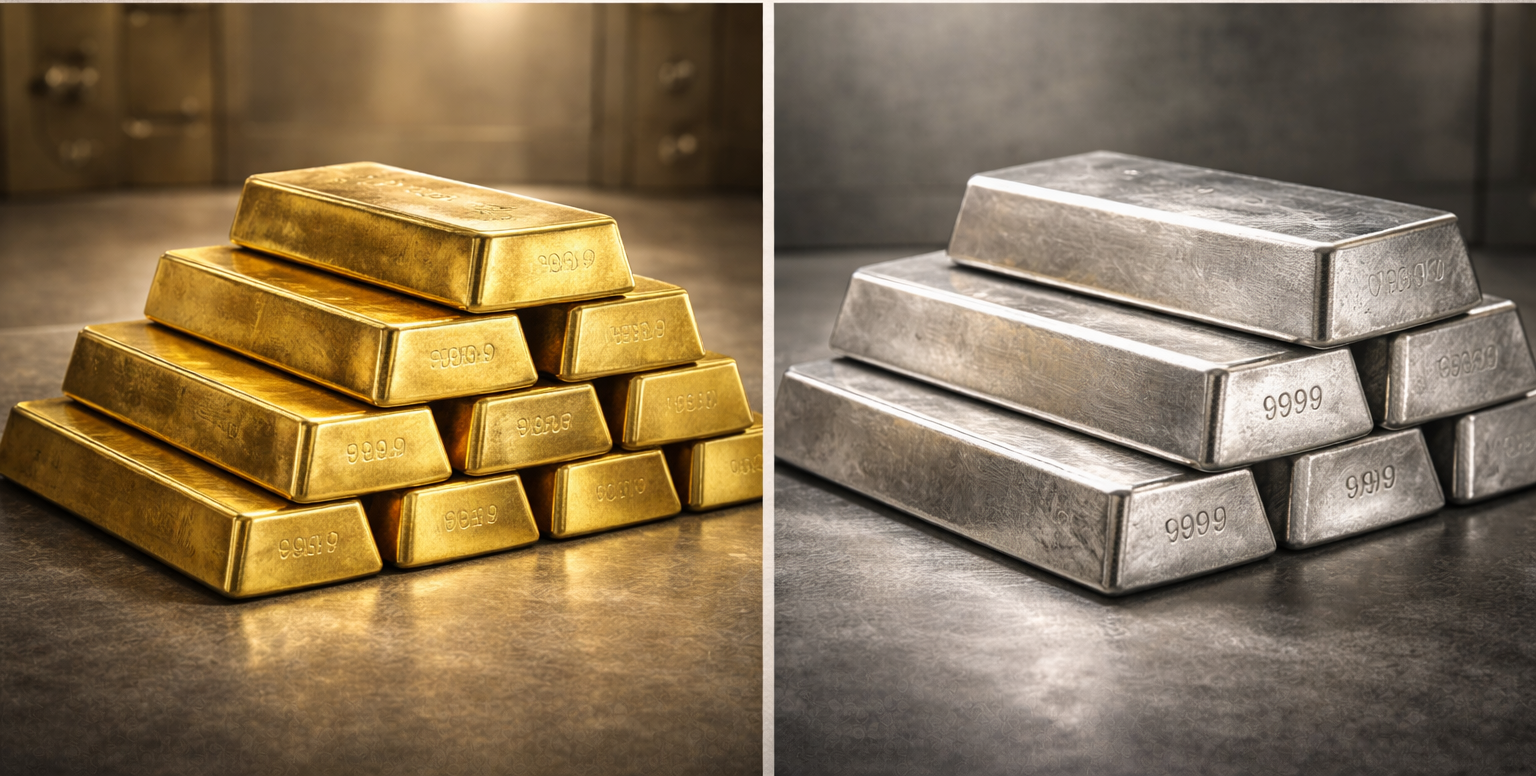
The IRS has strict requirements for precious metals held in retirement accounts. Gold must be 99.5% pure, silver must be 99.9% pure, platinum must be 99.95% pure, and palladium must be 99.95% pure. Common approved items include American Eagle coins, Canadian Maple Leaf coins, and certain bars from approved refiners.
Collectible coins, numismatic coins, and many foreign coins are prohibited. The metals must be manufactured by a national government mint or an approved refiner, assayer, or manufacturer. Our guide to IRA-eligible gold coins provides specific examples of approved precious metals.
Account Setup and Funding
How Do I Open a Gold IRA?
Opening a Gold IRA requires working with a custodian that specializes in self-directed IRAs and precious metals. The process typically involves completing application paperwork, providing identification, and funding the account through a rollover, transfer, or direct contribution.
You’ll need to choose both a custodian to hold the account and a dealer to purchase the precious metals. Some companies provide both services, while others specialize in one area. Research is essential, as discussed in our Gold IRA scams guide.
Can I Roll Over My Existing Retirement Account?
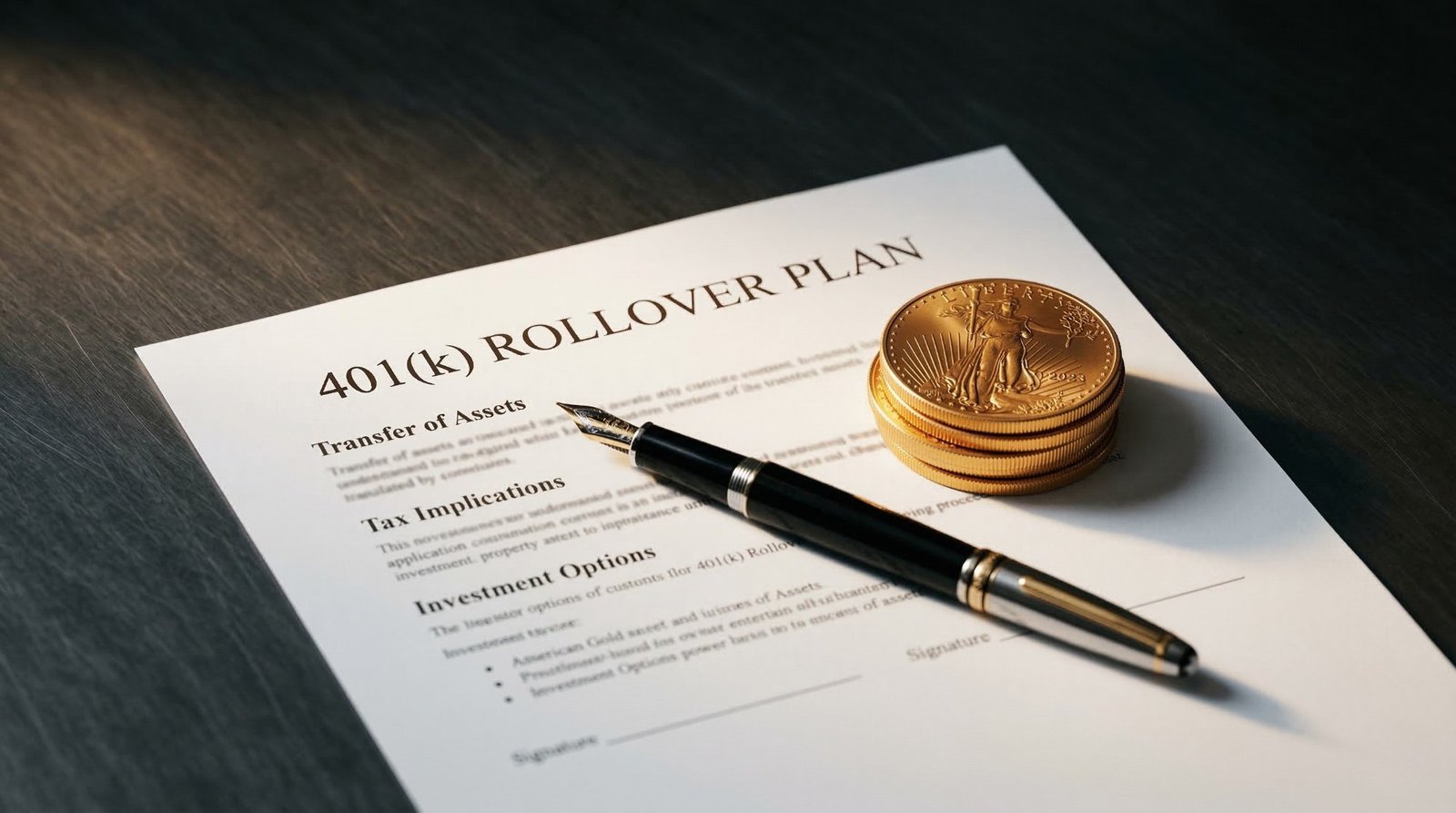
Yes, you can move funds from existing 401(k), 403(b), TSP, or traditional IRA accounts into a Gold IRA through a rollover or transfer. Direct rollovers, where funds move directly between custodians, are generally preferred because they avoid potential tax complications and the 60-day rule that applies to indirect rollovers.
The process involves requesting a distribution from your current account administrator and directing those funds to your new Gold IRA custodian. Our 401(k) to Gold IRA rollover guide walks through this process step by step, while our Gold IRA rollover rules explains the important regulations to follow.
What Are the Contribution Limits?
Gold IRAs follow the same contribution limits as traditional and Roth IRAs. For 2024, the annual contribution limit is $7,000 for individuals under 50 and $8,000 for those 50 and older, including the $1,000 catch-up contribution. These limits apply to the total contributions across all your IRA accounts, not per account.
If you’re rolling over funds from an employer-sponsored plan like a 401(k), those amounts don’t count toward annual contribution limits. Rollover amounts can be substantially higher than annual contribution limits.
Costs and Fees Structure
What Fees Should I Expect?
Gold IRAs typically involve several types of fees that don’t apply to traditional IRAs holding paper assets. These include custodian fees, storage fees, insurance fees, and dealer markups on precious metals purchases.
Annual custodian fees generally range from $100 to $300, while storage fees can vary from $100 to $300 annually depending on the amount stored. Some custodians charge based on account value rather than flat fees. Setup fees, wire transfer fees, and liquidation fees may also apply.
Our comprehensive Gold IRA fees guide breaks down all potential costs and provides strategies for minimizing fees over time.
Are There Minimum Investment Requirements?
Most Gold IRA companies require minimum initial investments ranging from $5,000 to $50,000, with some requiring $100,000 or more. These minimums help offset the fixed costs associated with account setup and ongoing administration.
The minimum investment requirement often depends on the custodian and storage facility chosen. Some companies offer lower minimums but may charge higher ongoing fees. For detailed information about minimum requirements across different companies, see our Gold IRA minimum investment analysis.
Storage and Security
Where Is My Gold Stored?
IRS regulations require that precious metals in a Gold IRA be stored at an approved depository, not at your home or in a personal safe deposit box. These depositories are highly secure facilities that specialize in precious metals storage and are regularly audited for compliance.
Most depositories offer segregated storage, where your metals are kept separate from other investors’ holdings, or commingled storage, where metals of the same type are stored together. Segregated storage typically costs more but provides additional peace of mind.
Is My Gold Insured?
Reputable depositories carry comprehensive insurance coverage for the precious metals in their custody. This insurance typically covers theft, natural disasters, and other potential losses. However, insurance terms and coverage limits vary between facilities.
When evaluating storage options, ask about insurance coverage details, including coverage limits, deductibles, and what events are covered. The storage facility’s insurance should be separate from any insurance your custodian might carry on the account itself.
Can I Take Physical Possession of My Gold?
While you cannot take possession of Gold IRA assets without triggering a distribution, you can take distributions in the form of physical precious metals. This would be treated as a taxable distribution (for traditional Gold IRAs) and would be subject to early withdrawal penalties if you’re under age 59½.
Some investors choose to take required minimum distributions in the form of physical metals rather than cash, though this requires careful coordination with the custodian and may involve additional logistics.
Tax Implications
How Are Gold IRAs Taxed?
Gold IRAs follow the same tax treatment as traditional and Roth IRAs. Traditional Gold IRAs offer tax-deductible contributions (subject to income limits) and tax-deferred growth, with distributions taxed as ordinary income. Roth Gold IRAs use after-tax contributions but offer tax-free qualified distributions.
The IRS IRA investment FAQ provides official guidance on tax treatment of alternative investments within retirement accounts. Capital gains treatment does not apply to precious metals held within IRAs, regardless of how long they’re held.
What About Required Minimum Distributions?
Like all traditional IRAs, Gold IRAs are subject to required minimum distributions (RMDs) beginning at age 73. The RMD amount is calculated based on your account balance and IRS life expectancy tables, just like traditional IRAs.
Taking RMDs from a Gold IRA can be more complex than from accounts holding cash or securities. You may need to liquidate some precious metals to meet the distribution requirement, unless you have sufficient cash in the account. The IRS RMD FAQ provides detailed information about RMD requirements.
Are There Any Tax Advantages?
Gold IRAs offer the same tax advantages as traditional retirement accounts but no additional tax benefits specifically related to holding precious metals. The main advantage comes from the general IRA tax treatment: tax-deductible contributions and tax-deferred growth for traditional IRAs, or tax-free qualified withdrawals for Roth IRAs.
Claims about special tax advantages for precious metals in IRAs should be viewed skeptically. The tax benefits come from the IRA structure itself, not from the type of assets held within the account.
Investment Considerations
How Do I Know If a Gold IRA Is Right for Me?
Determining whether a Gold IRA fits your retirement strategy depends on your individual financial situation, risk tolerance, and retirement timeline. Consider factors such as your current retirement savings, investment knowledge, and comfort with alternative investments.
Gold IRAs involve unique considerations not present with traditional retirement accounts, including storage costs, liquidity considerations, and the complexity of buying and selling physical precious metals. Our analysis of is a Gold IRA a good idea explores these factors in detail.
How Does a Gold IRA Compare to Other Retirement Options?
Gold IRAs differ significantly from traditional retirement accounts in terms of liquidity, costs, and complexity. While traditional IRAs can be easily managed online with low fees, Gold IRAs require specialized custodians, storage facilities, and precious metals dealers.
For a detailed comparison of retirement account options, see our Gold IRA vs Traditional IRA analysis and our Gold IRA vs 401(k) comparison. These resources help you understand how Gold IRAs fit within the broader retirement planning landscape.
What Should I Look for in a Gold IRA Company?
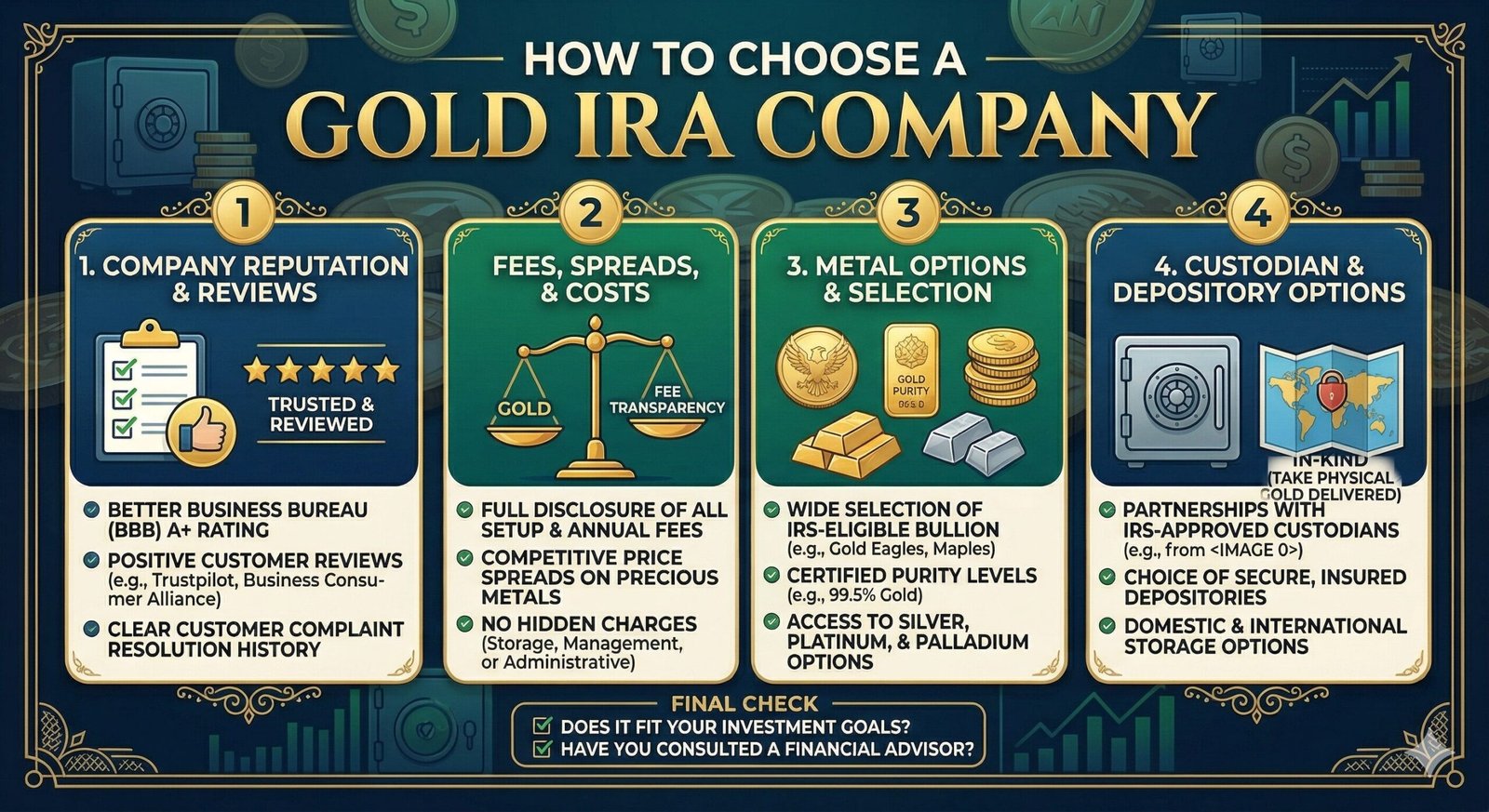
When evaluating Gold IRA companies, consider factors such as reputation, transparency, fees, storage options, and customer service. Look for companies with strong Better Business Bureau ratings, positive customer reviews, and clear fee structures.
Verify that any company you consider is properly licensed and has appropriate industry certifications. Check FINRA BrokerCheck for any regulatory issues and review bbb.org for customer complaint histories. Our Best Gold IRA Companies of 2026 provides detailed evaluations of leading providers.
Frequently Asked Questions
Can I hold gold ETFs or mining stocks in a Gold IRA?
No, Gold IRAs can only hold physical precious metals that meet IRS purity requirements. ETFs, mining stocks, and certificates are not permitted. However, these securities can be held in traditional self-directed IRAs alongside other investments.
What happens to my Gold IRA when I die?
Gold IRAs follow the same beneficiary rules as traditional IRAs. Your designated beneficiaries will inherit the account and can choose from several distribution options, including taking immediate distributions, rolling the assets into their own IRAs (for spouses), or taking distributions over their lifetime. The inherited assets maintain their tax-deferred status until distributed.
Can I add to my Gold IRA after the initial investment?
Yes, you can make additional contributions to your Gold IRA up to the annual IRA contribution limits, subject to your earned income and other IRA contributions for the year. You can also roll over additional retirement account assets into your Gold IRA, though rollover amounts don’t count toward annual contribution limits.
How often can I buy and sell precious metals in my Gold IRA?
There are no IRS restrictions on how frequently you can buy and sell precious metals within your Gold IRA. However, each transaction typically involves fees from your custodian and dealer, so frequent trading can be expensive. Most investors in Gold IRAs focus on long-term holdings rather than active trading.
What happens if the precious metals market crashes while my gold is in storage?
Market value fluctuations affect the value of your Gold IRA holdings, just as stock market changes affect traditional IRA values. Past performance is not a guarantee of future results, and precious metals can experience significant price volatility. Your physical precious metals remain in storage regardless of market conditions, but the account value will reflect current market prices.
If you’re considering a Gold IRA as part of your retirement strategy, research multiple companies and understand all associated costs and requirements. Our Best Gold IRA Companies of 2026 guide provides detailed comparisons to help you make an informed decision about which provider might best serve your needs.
This article is for informational purposes only and does not constitute financial or tax advice. Investing in precious metals involves risk including possible loss of principal.