
Gold coins are among the most widely used forms of physical gold in retirement-focused portfolios. Their standardized weight, purity, and global recognition make them particularly suitable for long-term holdings, whether owned directly or held within a gold IRA structure. For retirement investors, the objective is not collectability or speculation, but liquidity, cost efficiency, and regulatory compliance.
When considering the best gold coins for investment, it is essential to evaluate various options available in the market.
This article explains what makes a gold coin suitable for retirement portfolios and outlines the types of coins most commonly used for this purpose.
Why Gold Coins Are Used in Retirement Portfolios
Gold coins offer several characteristics that align well with retirement investing. They are easily divisible, widely recognized, and actively traded in global markets. Compared with large gold bars, coins provide greater flexibility for partial liquidation, which can be important when meeting retirement income needs or required distributions.
Therefore, selecting the best gold coins involves understanding market dynamics and the inherent value they provide.
For retirement-focused investors, gold coins are typically used to preserve purchasing power, diversify portfolio risk, and reduce exposure to financial system stress. They are not intended to generate income, but to function as a long-term store of value alongside traditional assets.
Coins also tend to be more practical than bars for individual investors, particularly when holdings are moderate in size.
Key Criteria for Retirement-Suitable Gold Coins
Among the best gold coins, those with high purity and recognition are particularly well-suited for retirement portfolios.
Best Gold Coins for Retirement Portfolios
The best gold coins often provide a blend of quality and liquidity that satisfies retirement investors.
Not all gold coins are appropriate for retirement portfolios. Several factors should guide selection.
Purity and Investment Grade
Retirement portfolios should focus on investment-grade coins with high gold content, typically 99.9% purity or higher. Coins valued primarily for their gold content rather than rarity or design are preferred.
Liquidity and Recognition
Widely recognized sovereign-minted coins trade with tighter spreads and are easier to sell. High liquidity reduces transaction costs and improves flexibility over time.
Reasonable Premiums
Investors should also be aware of the best gold coins for portfolio diversification, as they can mitigate risks effectively.
Coins with excessive premiums over the spot price reduce capital efficiency. For retirement purposes, lower-premium bullion coins are generally more appropriate than collectible or numismatic issues.
Regulatory Eligibility
For gold IRAs, coins must meet IRS eligibility requirements. Many widely traded bullion coins qualify, while collectibles do not.
Gold Coins for Retirement Portfolio Diversification
As the market evolves, staying informed about the best gold coins helps investors make sound decisions.
American Gold Eagle
The American Gold Eagle is one of the most recognized gold coins globally. Issued by the U.S. Mint, it carries legal tender status and is backed by the U.S. government for weight and purity.
Although its gold content is 91.67%, the American Gold Eagle is explicitly permitted in gold IRAs under U.S. regulations. Its widespread recognition and deep secondary market make it highly liquid.
Premiums are typically higher than those of some 99.9% pure coins, but liquidity and regulatory clarity often offset the higher cost for retirement investors.
Canadian Gold Maple Leaf
The Canadian Gold Maple Leaf is known for its 99.99% purity and consistent minting standards. Issued by the Royal Canadian Mint, it is one of the most widely traded bullion coins worldwide.
Its high purity, strong recognition, and competitive premiums make it a common choice for both direct ownership and gold IRA portfolios. The Maple Leaf is generally easy to buy, sell, and store.
For investors prioritizing purity and efficiency, it is often considered a benchmark bullion coin.
South African Krugerrand
The Krugerrand was the first modern bullion gold coin and remains one of the most actively traded. It contains one troy ounce of gold, alloyed for durability.
Like the American Gold Eagle, the Krugerrand is not 99.9% pure, but it is widely accepted in global markets. Liquidity is strong, particularly outside the United States.
The best gold coins can be a vital part of any retirement strategy when selected thoughtfully.
Eligibility for gold IRAs depends on current regulatory interpretation and product specifications, so investors should confirm compliance before purchasing for retirement accounts.
With the best gold coins, investors can achieve both liquidity and value preservation.
Australian Gold Kangaroo
Issued by the Perth Mint, the Australian Gold Kangaroo is a 99.99% pure bullion coin with government backing. It is widely recognized and typically carries competitive premiums.
The Kangaroo is known for its annual design changes, though it remains a bullion product rather than a collectible when purchased for investment purposes. Its purity and liquidity make it suitable for long-term retirement holdings.
Austrian Gold Philharmonic
The Austrian Gold Philharmonic is a 99.99% pure coin issued by the Austrian Mint. It is particularly popular in Europe but trades globally.
The coin’s purity, standardization, and legal tender status support its use in retirement portfolios. Liquidity is generally strong, though premiums can vary by region.
Gold Coins With Higher Risk for Retirement Portfolios
Collectible and Numismatic Coins
Coins marketed for rarity, historical significance, or limited mintage often carry large premiums unrelated to gold content. These premiums can be difficult to recover and introduce valuation uncertainty.
Such coins are generally unsuitable for retirement portfolios and are not permitted in gold IRAs.
High-Premium Specialty Coins
Even when coins are technically bullion, unusually high premiums reduce long-term efficiency. For retirement purposes, simplicity and cost discipline are more important than aesthetic features.
Unrecognized or Illiquid Coins
Coins from obscure mints or with limited market acceptance can present resale challenges. Retirement portfolios benefit from standardization and global recognition.
Gold Coins vs Gold Bars in Retirement Portfolios
Choosing the best gold coins for IRAs ensures compliance with regulations while maximizing investment potential.
Gold coins and bars both have a place in physical gold allocations, but coins are often better suited to retirement investors.
Coins offer easier partial liquidation and are generally more recognizable to a broader range of buyers. Bars may offer lower premiums at larger sizes, but they can be less flexible and may require additional verification when selling.
Ultimately, being informed about the best gold coins can lead to more strategic financial decisions.
Incorporating the best gold coins into a retirement plan can enhance overall portfolio performance.
Ultimately, the best gold coins serve as a resilient addition to any retirement portfolio.
In conclusion, prioritizing the best gold coins ensures a secure and diversified retirement plan.
By focusing on the best gold coins, investors can enhance their long-term financial stability.
For many retirement portfolios, coins provide a balance between liquidity and cost efficiency.
The most compelling aspect of the best gold coins is their ability to serve as a hedge against market volatility.
Investors looking for the best gold coins should prioritize those that have established reputations.
In summary, the best gold coins for retirement not only provide security but also play a strategic role in wealth accumulation.
Gold Coins in Gold IRAs
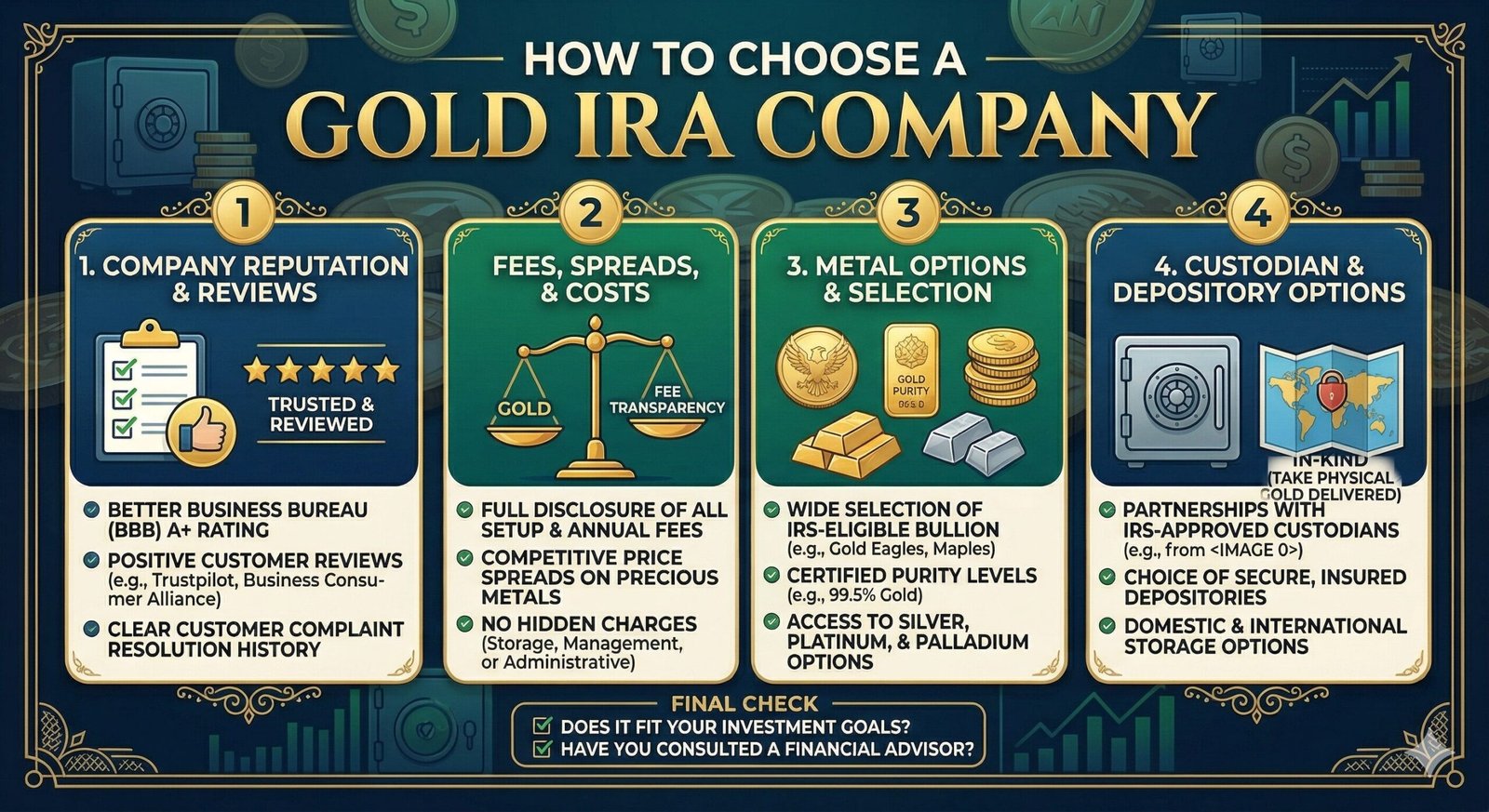
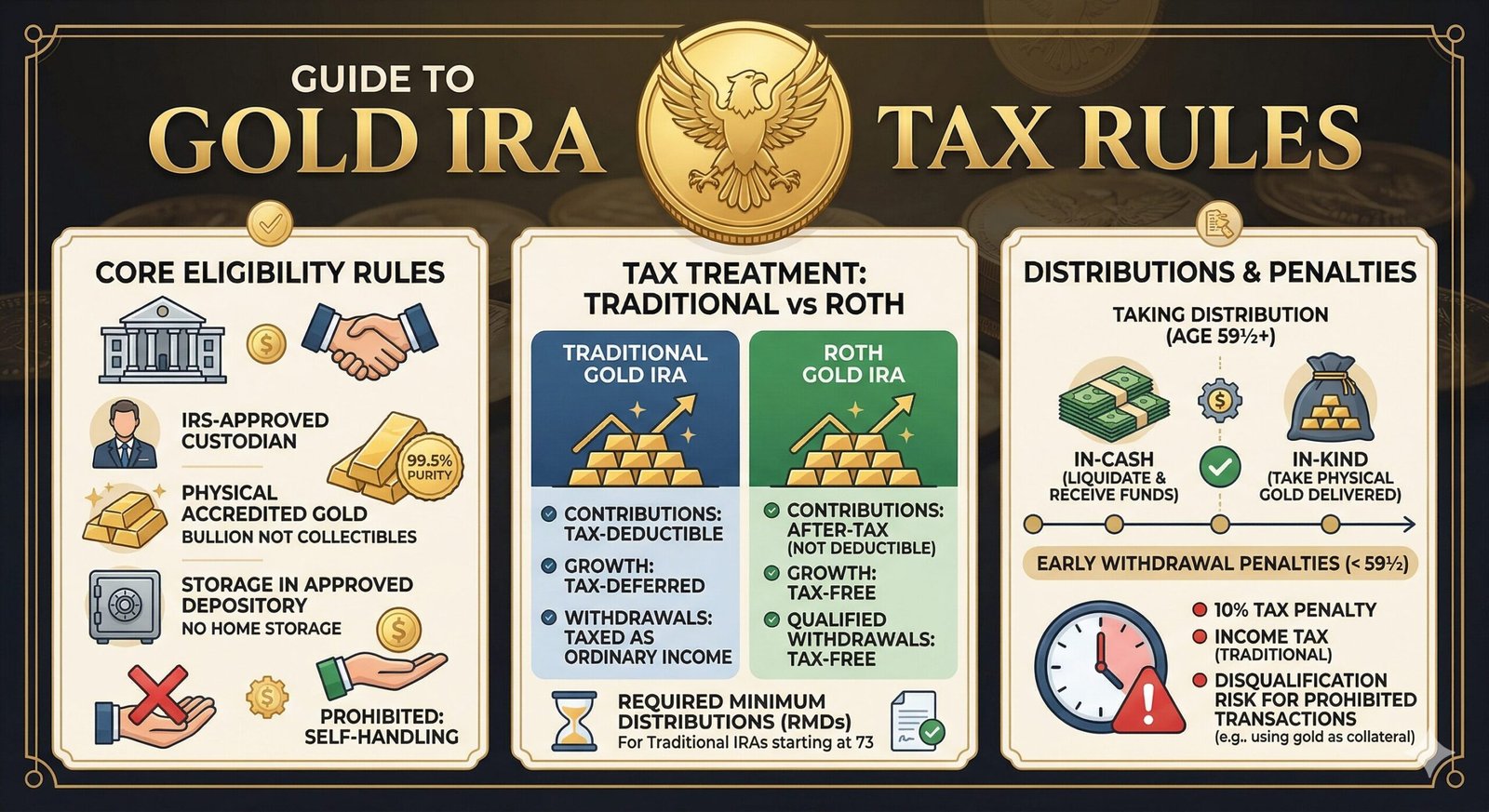
When held within a gold IRA, coins must meet specific eligibility criteria. Approved coins are stored in IRS-approved depositories and cannot be held personally while inside the account.
Investors should ensure that coins purchased for IRAs are explicitly designated as eligible and sourced through custodians and dealers familiar with retirement account requirements.
Storage, insurance, and custodial costs should be considered alongside coin selection.
Portfolio Allocation Considerations
Gold coins are typically used as part of a diversified retirement strategy rather than as a primary growth engine. Allocations are often modest and designed to complement equities and bonds.
Overconcentration in gold can limit long-term growth potential, particularly during extended periods of economic expansion. The role of gold coins is primarily defensive, providing diversification and protection against specific macroeconomic risks.
Position sizing should reflect overall financial goals, time horizon, and risk tolerance.
Conclusion
The best gold coins for retirement portfolios are those that emphasize purity, liquidity, regulatory clarity, and reasonable premiums. Widely recognized bullion coins issued by sovereign mints are generally the most appropriate choice.
For retirement investors, gold coins are not about speculation or collectibility. Their value lies in standardization, global acceptance, and their ability to function as a long-term store of value within a disciplined, diversified portfolio.
When selected carefully and sized appropriately, gold coins can serve as a reliable component of a retirement strategy focused on resilience rather than short-term performance.
Related guides
- Gold IRA Consumer Affairs Reviews: What to Look For
- Gold IRA Trustpilot Reviews: What Real Customers Say
- Gold IRA BBB Complaints: What Consumer Reports Reveal
- Is a Gold IRA Worth the Fees? A Cost-Benefit Analysis
- Are Gold IRA Fees Too High? Breaking Down the Real Costs
- Gold IRA Mistakes to Avoid: 10 Common Errors Investors Make