
Gold IRA vs Traditional IRA: Key Differences Explained
Gold IRAs and traditional IRAs are both retirement accounts governed by the same tax framework, but they differ significantly in what they hold, how they operate, and the risks they introduce into a portfolio. Understanding these differences is essential for investors considering whether physical gold has a role within a long-term retirement strategy.
When considering retirement options, many people find themselves debating Gold IRA vs Traditional IRA.
This article will highlight the advantages of Gold IRA vs Traditional IRA.
Rather than competing alternatives, gold IRAs and traditional IRAs are best understood as variations within the broader IRA structure, each serving different objectives.
Understanding Gold IRA vs Traditional IRA helps you align your investment strategy with your retirement goals.
What Is a Traditional IRA?
A traditional IRA is a tax-advantaged retirement account designed to hold financial assets such as stocks, bonds, mutual funds, and exchange-traded funds. Contributions may be tax-deductible depending on income and participation in employer-sponsored plans, and investment growth is tax-deferred.
Investors often ask about the differences in risk between Gold IRA vs Traditional IRA.
Withdrawals are taxed as ordinary income, and required minimum distributions (RMDs) apply once the account holder reaches the applicable age. Traditional IRAs are widely used due to their simplicity, flexibility, and low administrative costs. Traditional IRAs are typically custodied by brokerage firms and benefit from broad liquidity and transparent pricing.
What Is a Gold IRA?
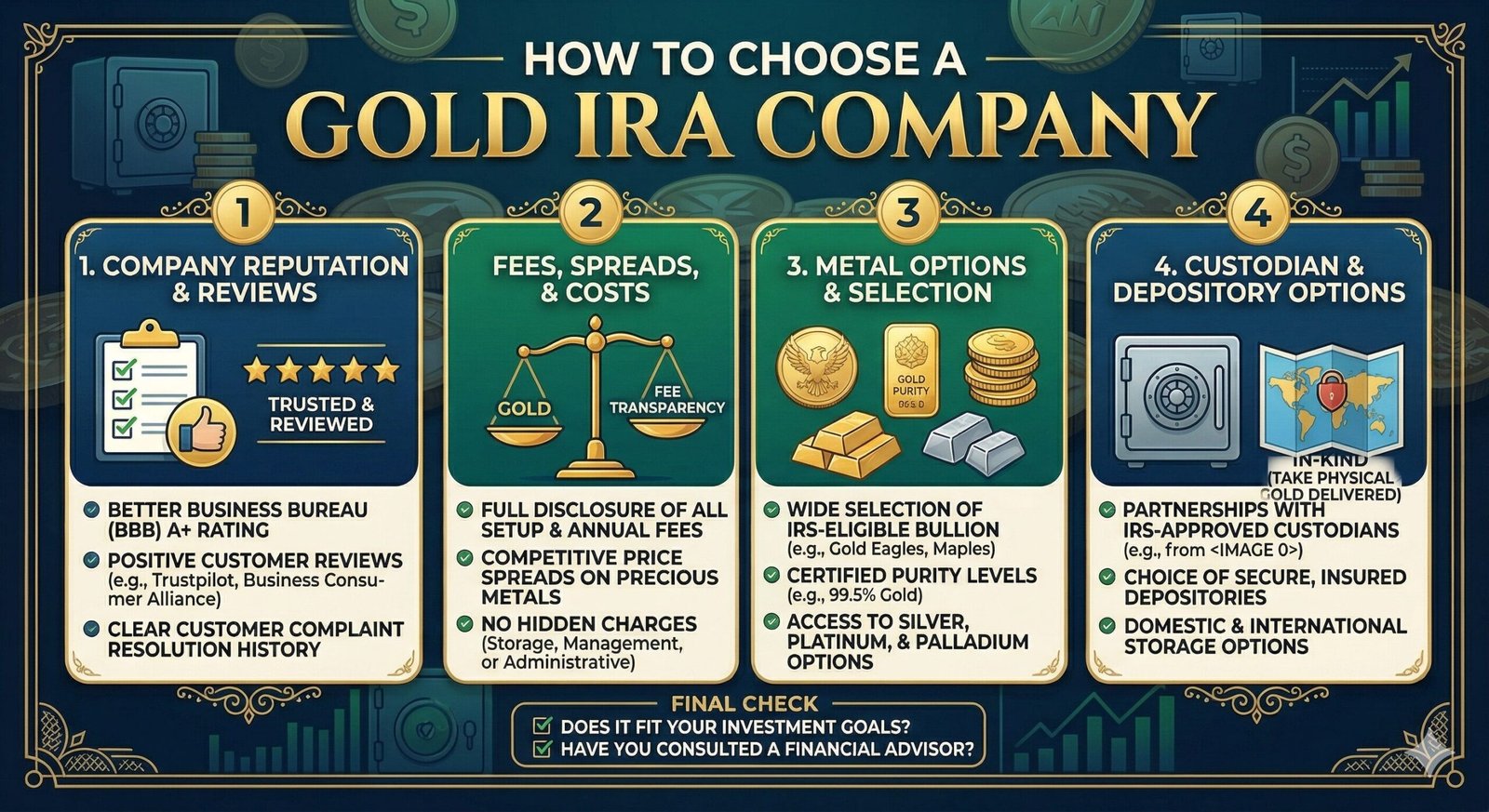
A gold IRA is a form of self-directed IRA that allows investment in physical precious metals, most commonly gold, but also silver, platinum, and palladium under specific conditions. The account follows the same tax rules as a traditional or Roth IRA, but differs in asset eligibility and custody requirements.
It’s essential to know how Gold IRA vs Traditional IRA can affect your long-term savings.
Many investors are looking into Gold IRA vs Traditional IRA for diversification purposes.
Considering the differences between Gold IRA vs Traditional IRA can help in making informed decisions.
Gold held in a gold IRA must meet minimum purity standards and must be stored in an approved depository. Personal possession of the metal is not permitted while it remains within the account.
Gold IRAs are generally used to introduce tangible assets into retirement portfolios, often for diversification or risk management purposes.
The tax implications of Gold IRA vs Traditional IRA are crucial for planning your retirement.
Many factors make Gold IRA vs Traditional IRA a complex decision for investors.
Understanding the risks associated with Gold IRA vs Traditional IRA can help mitigate potential losses.
Key Structural Differences
Asset Type
Traditional IRAs hold financial instruments that represent claims on companies, governments, or funds. Gold IRAs hold physical metal that is not tied to the performance of issuers or borrowers.
Custody and Storage
Traditional IRAs are held electronically through brokerage accounts. Gold IRAs require a qualified custodian and third-party storage in approved depositories, adding operational complexity.
Liquidity
Assets in traditional IRAs can typically be bought or sold quickly at market prices. Gold IRA transactions involve physical settlement, which can extend execution and settlement timelines.
Costs and Fees
Traditional IRAs often have low or negligible account fees, particularly when invested in low-cost funds. Gold IRAs generally involve higher ongoing costs, including custodial fees, storage charges, and transaction spreads.
Tax Treatment and Contributions
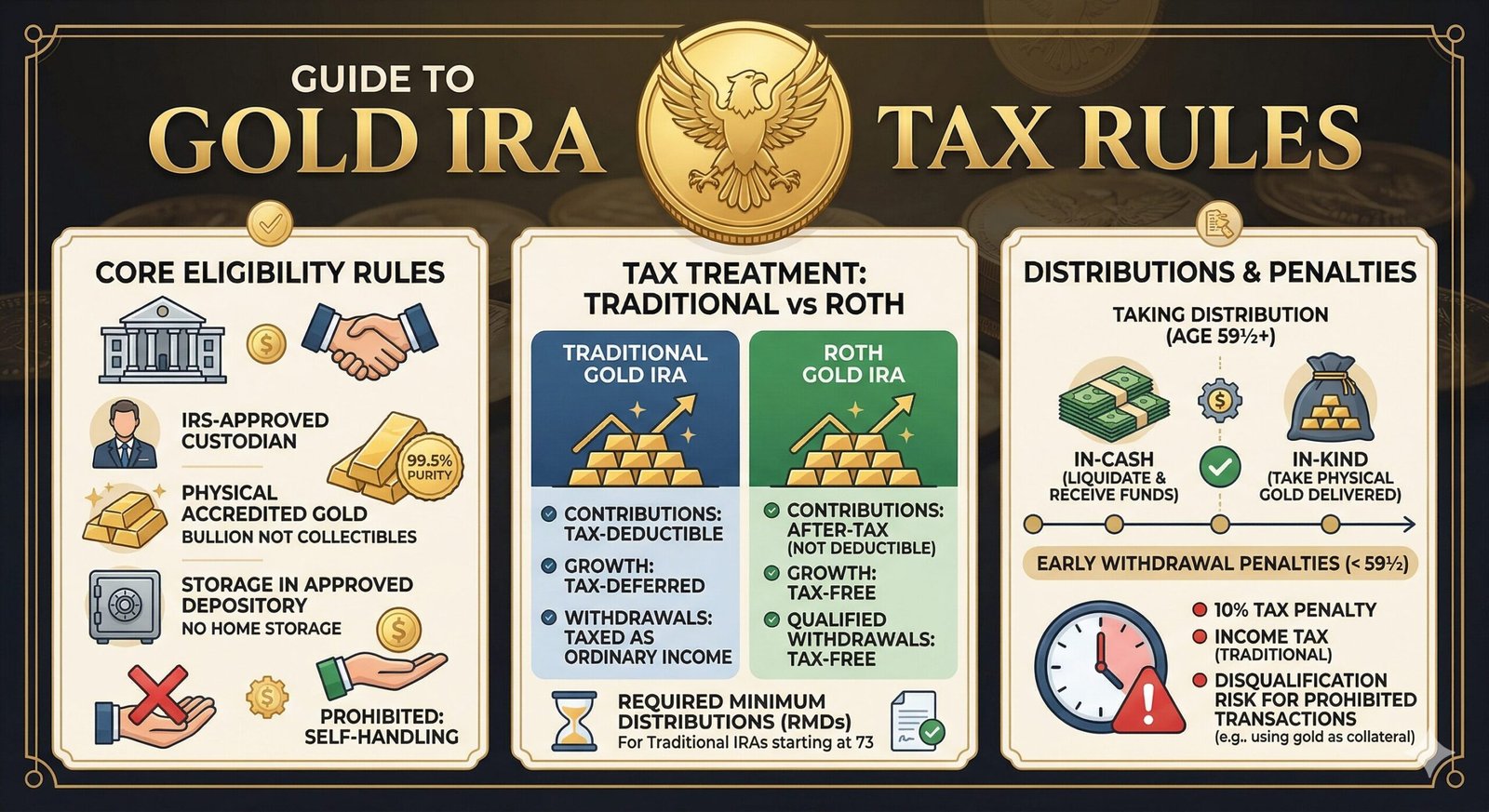
From a tax perspective, gold IRAs and traditional IRAs are largely identical when structured as traditional accounts.
Contributions may be tax-deductible, subject to income limits and plan participation. Investment growth is tax-deferred, and withdrawals are taxed as ordinary income. Early withdrawals may incur penalties regardless of asset type.
Roth versions of both account types allow after-tax contributions and tax-free qualified withdrawals, and Roth accounts are not subject to RMDs during the account holder’s lifetime.
The tax treatment depends on account structure, not on whether the IRA holds gold or financial assets.
Risk and Return Considerations
Traditional IRAs invested in diversified portfolios benefit from long-term economic growth and compounding through earnings and dividends. Over long periods, equities have historically delivered higher real returns than non-income-producing assets.
Gold IRAs do not generate income and rely on price appreciation. Gold can underperform for extended periods, particularly during strong economic growth and rising real interest rates.
However, gold has historically exhibited lower correlation with equities and bonds in certain environments. This can reduce portfolio volatility and provide protection during periods of financial stress.
The trade-off is between growth potential and defensive characteristics.
Diversification and Portfolio Role
Traditional IRAs are typically growth-oriented, especially for investors in earlier stages of their careers. Gold IRAs are more often used as satellite allocations within broader retirement strategies.
Gold exposure within an IRA may appeal to investors concerned about inflation risk, currency stability, or systemic financial stress. However, overconcentration can limit long-term growth and increase opportunity cost.
Most institutional portfolio frameworks treat gold as a modest allocation rather than a core holding.
Regulatory and Compliance Considerations
Traditional IRAs are straightforward to manage, with well-established custodians and minimal compliance complexity.
Gold IRAs are subject to stricter rules regarding eligible assets, storage, and transactions. Improper handling, such as using ineligible products or taking personal possession, can result in penalties and loss of tax-advantaged status.
Ultimately, the choice between Gold IRA vs Traditional IRA depends on your financial objectives.
In conclusion, understanding Gold IRA vs Traditional IRA can significantly impact your retirement planning.
Investors must rely on custodians and dealers to maintain compliance, introducing operational and counterparty considerations.
Creditor Protection
Both traditional IRAs and gold IRAs generally receive creditor protection, though the scope varies by jurisdiction. Unlike employer-sponsored plans governed by ERISA, IRA protections depend on federal bankruptcy law and state statutes.
The presence of physical gold does not materially change creditor protection, but legal treatment may differ depending on account structure and location.
Who Might Prefer Each Option
A traditional IRA may be more appropriate for investors who prioritize simplicity, low costs, liquidity, and long-term growth through diversified financial markets.
A gold IRA may appeal to investors who want to introduce physical assets into retirement portfolios and are willing to accept higher costs and complexity in exchange for diversification and risk management benefits.
In many cases, the choice is not exclusive. Some investors maintain traditional IRAs while allocating a portion of retirement assets to gold through a separate self-directed account.
Conclusion
Gold IRAs and traditional IRAs share the same tax foundation but serve different purposes within a retirement strategy. Traditional IRAs emphasize growth, liquidity, and efficiency, while gold IRAs emphasize diversification and protection against specific macroeconomic risks.
The decision to use one, the other, or both should be driven by investment objectives, time horizon, and risk tolerance rather than short-term market expectations. When used appropriately and in moderation, each can play a distinct role in a well-constructed retirement portfolio.
Related guides
- Gold IRA Consumer Affairs Reviews: What to Look For
- Gold IRA Trustpilot Reviews: What Real Customers Say
- Gold IRA BBB Complaints: What Consumer Reports Reveal
- Is a Gold IRA Worth the Fees? A Cost-Benefit Analysis
- Are Gold IRA Fees Too High? Breaking Down the Real Costs
- Gold IRA Mistakes to Avoid: 10 Common Errors Investors Make