




Gold Ticker Test

Learn How to Invest in Gold — Everything You Need to Know

From understanding gold’s value to choosing the right investment type — start your journey toward smarter, safer gold investing

Basics of Gold Investing

Why Gold Holds Value?

How Inflation Affects Gold Prices?

Physical vs Paper Gold: Which Is Better?

How Much Gold Should You Own?

Investment Methods

Explore the different paths investors take to own gold

Buy Physical Gold (Bars, Coins & Bullion)

Gold ETFs and Mutual Funds

Good Gold Mining Stocks

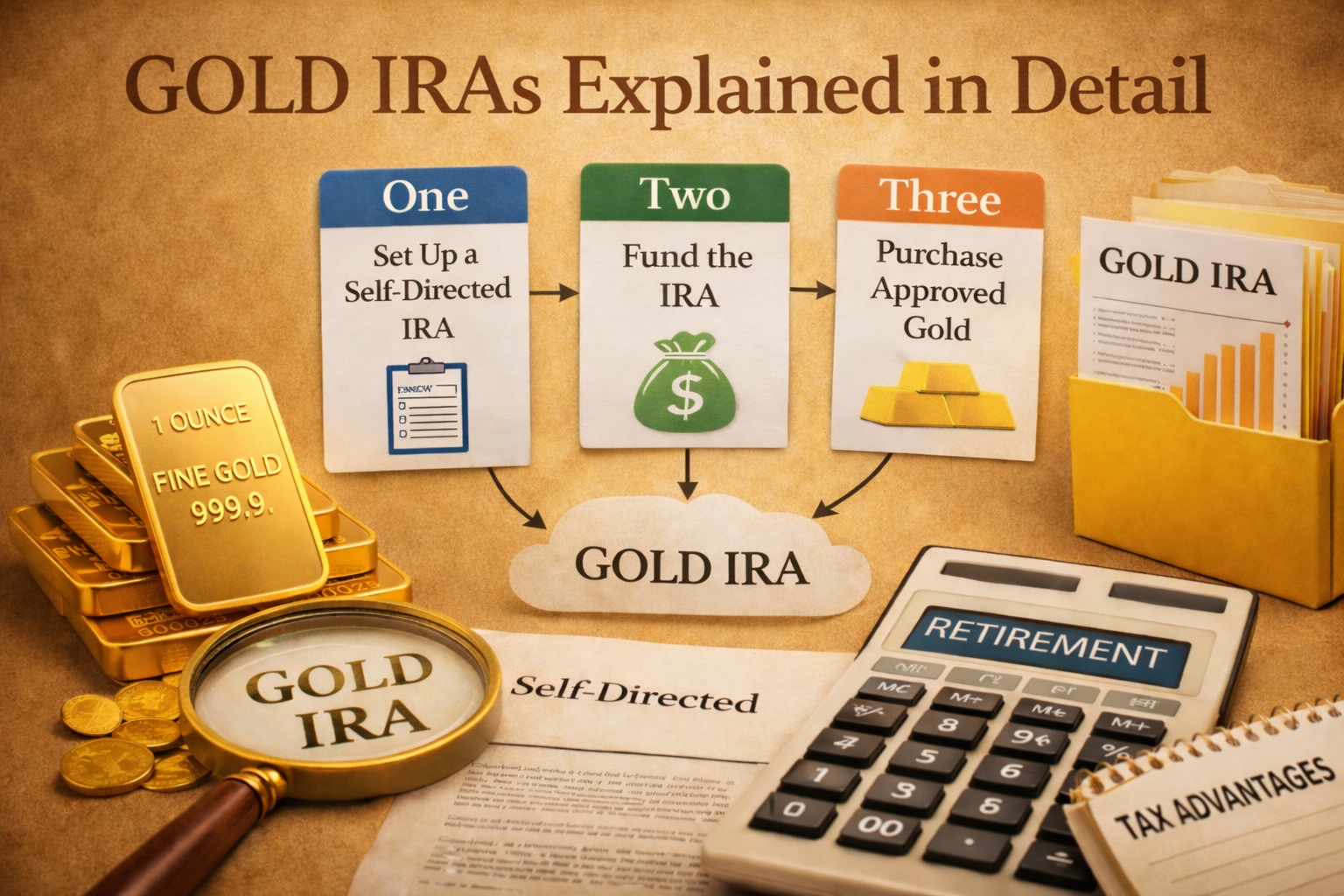
Gold IRAs Explained in Detail

Market Insights

Amandeep Singh

Gold vs Inflation: Does It Still Work?

Gold has long been viewed as a hedge against inflation, but its effectiveness has varied across different economic environments. Understanding how gold responds to inflation requires examining not only price levels, but also interest rates, monetary policy, and investor expectations. The Historical Case for Gold as an Inflation Hedge Historically, gold has preserved purchasing power over long periods. In environments where inflation erodes the value of paper currencies, gold’s limited supply and monetary characteristics have supported its role as a store of value. However, gold does not respond mechanically to inflation readings. Short-term inflation spikes have not always resulted in higher gold prices, particularly when policy responses offset inflation pressures. The Role of Real Interest Rates Real interest rates are a critical factor in gold’s inflation-hedging effectiveness. When inflation rises faster than nominal interest rates, real yields fall or turn negative. In these conditions, the opportunity cost of holding gold declines, often supporting stronger demand and higher prices. Conversely, when central banks raise interest rates aggressively to contain inflation, real yields may increase. In such environments, gold can struggle even as inflation remains elevated. Inflation Expectations vs. Inflation Data Gold tends to respond more to expectations of future inflation than to reported inflation data. If investors believe inflation will persist or accelerate, gold demand often increases. If inflation is perceived as temporary or well-contained, gold’s response may be muted. This distinction helps explain why gold has sometimes underperformed during periods of rising headline inflation but tightening monetary policy. Currency Effects and Purchasing Power Because gold is priced globally in U.S. dollars, inflation dynamics in the United States interact with currency movements. A weakening dollar can amplify gold’s response to inflation, while a strengthening dollar can offset inflation-driven demand. Outside the U.S., gold can serve as a more direct inflation hedge when local currencies depreciate rapidly, even if global gold prices remain stable. Short-Term vs. Long-Term Effectiveness Gold is generally a more reliable hedge against inflation over longer time horizons than over short periods. Over extended cycles, it has tended to maintain purchasing power, but it may lag other assets or experience periods of underperformance during shorter inflationary episodes. Gold’s strength as an inflation hedge is most evident when inflation coincides with monetary accommodation, fiscal expansion, or declining confidence in central bank credibility. Conclusion Gold can still function as an inflation hedge, but its effectiveness depends heavily on the broader monetary and interest rate environment. Inflation alone is not sufficient to drive gold prices higher. For investors, gold’s value lies less in tracking inflation precisely and more in providing protection against sustained inflation combined with declining real returns on financial assets. In this context, gold remains a relevant, though conditional, tool for managing inflation risk.

Read More »
Amandeep Singh

Gold Price Forecast 2025–2030: Expert Predictions

Forecasting gold prices over a multi-year horizon involves a high degree of uncertainty. Gold is influenced by a complex interaction of macroeconomic variables, monetary policy decisions, geopolitical developments, and investor behavior. Rather than relying on precise price targets, most professional forecasts focus on structural drivers and scenario-based outcomes. Looking toward 2025–2030, expert views on gold broadly center on whether the global economy is entering a period of higher inflation volatility, structurally lower real interest rates, and increased geopolitical fragmentation. These factors, more than short-term market fluctuations, are expected to shape gold’s long-term trajectory. The Limits of Long-Term Price Forecasting Gold does not generate cash flow, earnings, or yield, making traditional valuation models less applicable. Unlike equities or bonds, gold’s price cannot be discounted from future income streams. As a result, long-term forecasts tend to be conditional rather than deterministic. Most analysts emphasize that gold price projections should be understood as directional assessments tied to macroeconomic assumptions, not as precise predictions. Changes in monetary policy, inflation dynamics, or financial stability can materially alter outcomes over relatively short periods. For the 2025–2030 period, the range of plausible outcomes remains wide. Monetary Policy and the Outlook for Real Interest Rates One of the most important variables in gold forecasting is the path of real interest rates. Gold has historically performed best when real yields are low or negative, reducing the opportunity cost of holding a non-yielding asset. Many economists expect structural forces to limit how high real interest rates can rise over the long term. High sovereign debt levels, demographic pressures, and financial system sensitivity to higher rates may constrain central banks’ ability to maintain restrictive policy for extended periods. If inflation remains structurally higher than in the pre-2020 era, even modest nominal rates could result in subdued or negative real yields. Under such conditions, expert consensus generally views gold as well-supported over the medium to long term. Conversely, a sustained period of positive real yields, driven by credible inflation control and fiscal discipline, would present a less favorable environment for gold. Inflation Volatility and Currency Confidence While headline inflation may fluctuate, many analysts anticipate greater inflation volatility over the coming decade compared with the low and stable inflation environment that prevailed for much of the 1990s and 2000s. Supply chain reconfiguration, energy transition costs, labor market dynamics, and geopolitical disruptions all introduce potential inflationary pressures. Even if average inflation moderates, periodic spikes could erode confidence in fiat currencies and reinforce demand for gold as a store of value. Gold does not require persistent high inflation to perform well. It tends to benefit more from uncertainty about inflation outcomes and concerns about policymakers’ ability to maintain long-term price stability. From 2025 to 2030, experts generally view gold as a hedge against inflation risk rather than a direct bet on sustained high inflation. Fiscal Sustainability and Sovereign Debt Another key theme in long-term gold forecasts is fiscal sustainability. Government debt levels in many advanced economies have increased significantly, raising questions about long-term financing and monetary accommodation. If fiscal pressures lead to financial repression, monetization of debt, or sustained currency debasement, gold could benefit as an asset independent of sovereign balance sheets. Even absent a crisis, the need to manage high debt burdens may limit policymakers’ tolerance for high real interest rates. This dynamic supports the case for gold as a long-term portfolio diversifier. Most expert outlooks do not assume an imminent sovereign debt crisis, but they acknowledge that rising debt levels alter the long-term monetary landscape in ways that are structurally supportive for gold. Central Bank Demand as a Structural Factor Central bank accumulation has become a notable feature of the gold market and is widely expected to remain a long-term source of demand. Many official institutions continue to view gold as a strategic reserve asset that enhances diversification and reduces reliance on foreign currencies. Forecasts for 2025–2030 generally assume that central bank demand remains positive, particularly among emerging market economies seeking to rebalance reserve portfolios. While central banks are not price-insensitive buyers, their steady accumulation provides a degree of structural support that was largely absent in earlier decades. Experts caution, however, that official sector demand alone is not sufficient to drive sustained price increases without supportive macro conditions. Geopolitical Risk and Global Fragmentation Geopolitical considerations feature prominently in long-term gold outlooks. Increasing strategic competition, trade fragmentation, and the use of financial sanctions have altered perceptions of risk within the global financial system. Gold’s role as an asset without counterparty risk becomes more relevant in an environment where access to reserves and payment systems can be constrained by political factors. Analysts do not attempt to forecast specific geopolitical events, but many view elevated geopolitical risk as a persistent feature of the coming decade. This backdrop supports continued investor and official sector interest in gold as a form of financial insurance. Gold’s sensitivity to geopolitical developments is often episodic, but sustained uncertainty can underpin longer-term demand. Investment Demand and Portfolio Allocation Trends From an investment perspective, gold’s outlook is closely tied to portfolio allocation decisions. Over the long term, even small changes in institutional allocations can have a meaningful impact on demand, given gold’s relatively limited supply growth. Some experts anticipate a gradual reassessment of portfolio construction frameworks, particularly if traditional stock and bond correlations become less reliable. In such scenarios, gold may benefit from renewed interest as a diversifying asset. However, gold also faces competition from other real assets and alternative investments. Its performance relative to these alternatives will influence whether investment demand expands or contracts over the forecast period. Supply Dynamics and Production Constraints On the supply side, gold production growth has been relatively modest. New discoveries have become rarer, and development timelines have lengthened. Rising costs, regulatory hurdles, and declining ore grades present challenges for future supply expansion. While higher prices can incentivize exploration and development, experts generally do not expect a surge in supply sufficient to materially alter the long-term balance. Recycling provides some flexibility, but it tends to be

Read More »
mobsey1@gmail.com

How to Store Physical Gold Safely?

Proper storage is a critical consideration when investing in physical gold. Unlike financial assets held electronically, physical gold requires secure handling, protection against theft or damage, and appropriate documentation. This guide outlines the primary storage options available to investors and the key factors to evaluate when choosing between them. Why Gold Storage Matters Physical gold derives part of its value from the absence of counterparty risk. That benefit can be compromised if storage is inadequate. Poor storage increases exposure to theft, loss, damage, or insurance gaps, all of which can undermine gold’s role as a wealth-preservation asset. Storage decisions should align with the size of the holding, intended holding period, liquidity needs, and personal risk tolerance. Storing Gold at Home Home storage provides direct access and full personal control over the asset. For smaller holdings, this approach may be practical, but it requires careful planning. Security Considerations
Gold stored at home should be kept in a high-quality safe that is securely anchored and discreetly located. Visibility and disclosure should be minimized. Relying solely on hiding places is generally insufficient for meaningful amounts of gold. Insurance
Standard homeowner insurance policies often provide limited or no coverage for precious metals. Investors may need to arrange specialized insurance or riders to ensure adequate protection. Coverage limits, exclusions, and documentation requirements should be reviewed carefully. Advantages and Limitations
Home storage eliminates third-party risk and ongoing storage fees. However, it concentrates risk in a single location and places full responsibility for security and insurance on the investor. Using Bank Safe Deposit Boxes Bank safe deposit boxes offer a higher level of physical security than most home storage solutions. They are typically located within secured vaults and benefit from institutional safeguards. Access and Availability
Access is limited to bank operating hours and may be restricted during financial disruptions or bank closures. This can reduce liquidity in extreme scenarios. Insurance Coverage
Contents of safe deposit boxes are usually not insured by the bank. Separate insurance coverage is often required, and investors should confirm policy terms and valuation requirements. Professional Vault Storage Third-party vaulting services specialize in precious metals storage and are commonly used by high-net-worth individuals and institutional investors. Allocated vs. Unallocated Storage
Allocated storage means specific bars or coins are held in the investor’s name and segregated from other holdings. Unallocated storage represents a claim on a pooled inventory and carries additional counterparty risk. For long-term investors, allocated storage is generally preferred. Security and Insurance
Professional vaults typically offer high-grade security, auditing, and comprehensive insurance coverage. Storage fees are usually charged annually and vary based on location, value, and service level. Geographic Considerations
Some investors choose to store gold outside their home country to diversify political or jurisdictional risk. This adds complexity but may align with broader risk management strategies. Choosing the Right Storage Option No single storage solution is appropriate for all investors. Smaller holdings may justify home storage, while larger allocations often warrant professional vaulting. Liquidity needs, trust in institutions, cost sensitivity, and risk perception all play a role in the decision. Diversifying storage across multiple locations or methods can also reduce concentration risk, particularly for substantial holdings. Documentation and Record-Keeping Regardless of storage method, investors should maintain detailed records, including purchase receipts, serial numbers for bars, storage agreements, and insurance policies. Proper documentation supports resale, insurance claims, and estate planning. Final Considerations Secure storage is an integral part of physical gold investing. The goal is not only to protect against theft or loss, but to preserve gold’s function as a reliable, long-term store of value. A disciplined approach to storage, matched to the size and purpose of the investment, is essential to achieving that objective.

Read More »

Interactive Tools & Calculators

Gold Value Calculator

Gold/Silver Ratio Tracker

Live Gold Price Chart

Gold Investing Starter Kit (Free eBook)

Recommended Guides

No Posts Found!

Get Your Free Gold Investing Starter Kit

Join thousands of readers and receive expert tips straight to your inbox


Scroll to Top