
Gold vs stocks are fundamentally different assets, serving distinct roles within an investment portfolio. Comparing their performance over the past 20 years highlights these differences and underscores why the question is less about superiority and more about function, risk, and market conditions.
Long-Term Return Characteristics
Over extended periods, stocks have generally delivered higher total returns than gold. Equity markets benefit from economic growth, corporate earnings, dividends, and reinvestment. Over the past two decades, major stock indices have experienced multiple expansion cycles that supported long-term capital appreciation, despite intermittent drawdowns.
Gold, by contrast, does not generate income or compound through earnings growth. Its long-term return profile is driven primarily by price appreciation linked to macroeconomic forces such as real interest rates, inflation expectations, and currency dynamics. As a result, gold has typically underperformed equities during sustained economic expansions.
Performance Across Market Cycles
The past 20 years have included several distinct market environments, including periods of strong growth, financial crises, and aggressive monetary intervention. During equity bull markets, stocks have generally outpaced gold by a wide margin. Conversely, during periods of market stress or declining confidence in financial systems, gold has often outperformed or provided capital preservation when equities declined.
Notably, gold has tended to perform best during episodes of rising systemic risk, financial instability, or negative real interest rates. Stocks have been more sensitive to economic slowdowns, earnings contractions, and tightening financial conditions.
Volatility and Drawdowns
Equities typically experience higher volatility and deeper drawdowns than gold, particularly during recessions or financial crises. Over the past 20 years, stock markets have undergone multiple sharp corrections, some of which required extended periods to recover.
Gold has historically exhibited lower correlation to equities and, in certain periods, has acted as a stabilizing asset. While gold prices can be volatile in the short term, its drawdowns have often been less severe than those of equities during broad market selloffs.
Inflation and Monetary Policy Sensitivity
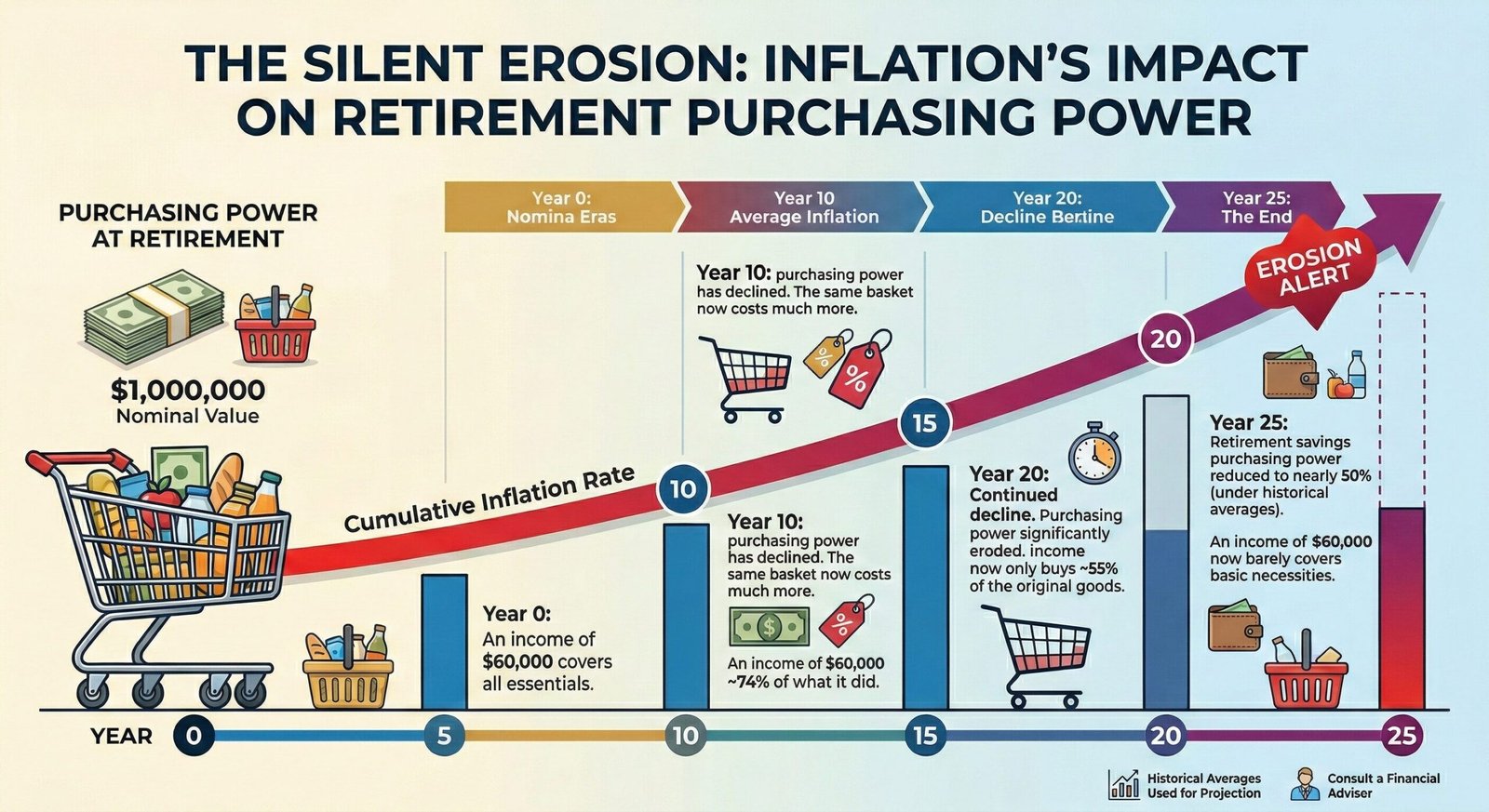
Gold’s performance has been closely tied to monetary policy and real interest rates. Periods of accommodative policy, expanding central bank balance sheets, or rising inflation concerns have tended to favor gold. Stocks, while also influenced by monetary conditions, rely more directly on economic growth and profit margins.
In environments where inflation pressures outpace interest rate increases, gold has often compared favorably to equities. In contrast, rising real yields have generally benefited stocks relative to gold.
Risk-Adjusted Perspective
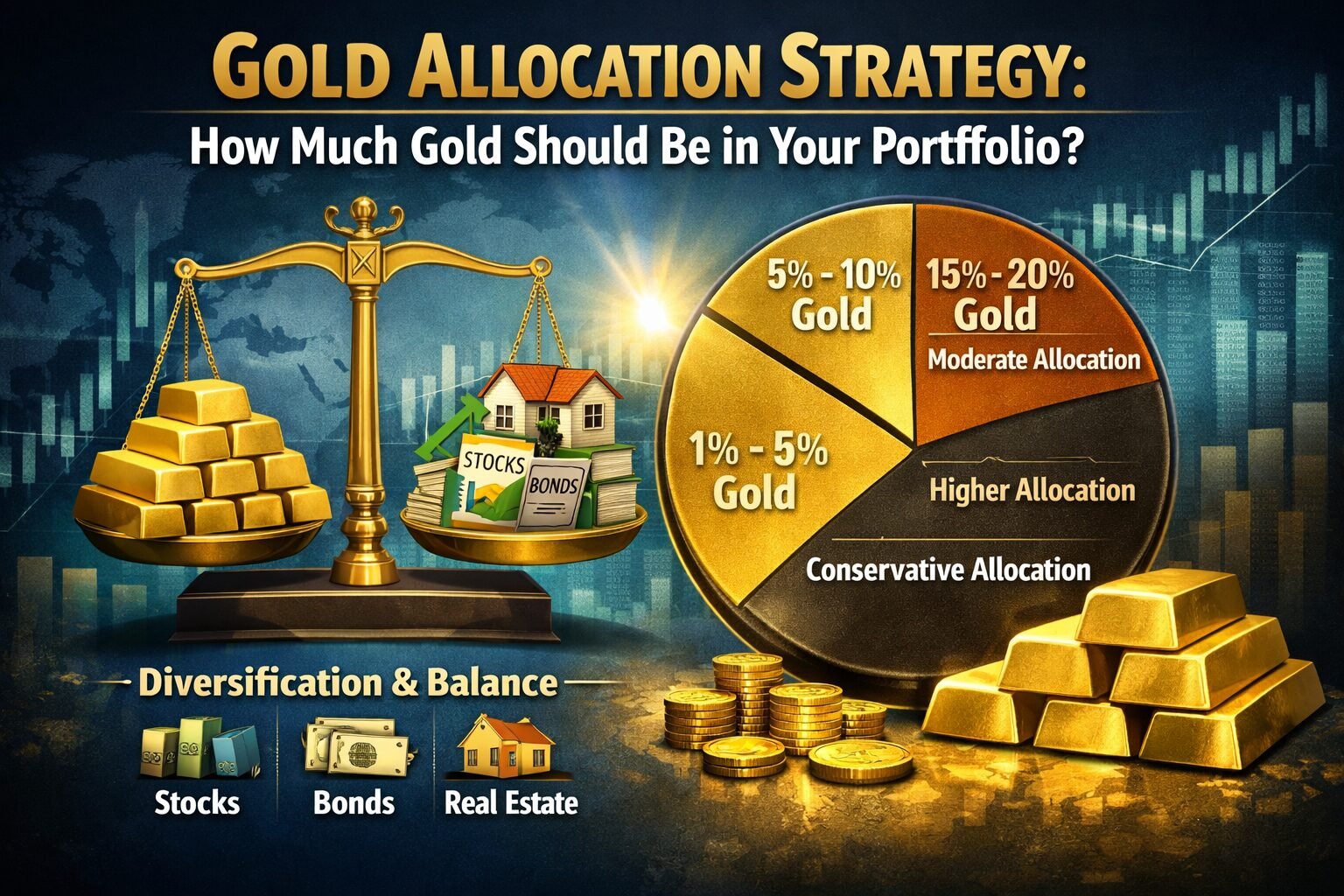
From a risk-adjusted standpoint, equities have rewarded investors willing to tolerate higher volatility and drawdowns. Gold’s value has been less about maximizing returns and more about reducing portfolio risk and smoothing performance across market cycles.
Over the past 20 years, portfolios that combined stocks and gold have often experienced lower overall volatility than equity-only portfolios, even if absolute returns were lower than equities during strong bull markets.
Conclusion
Stocks and gold are not direct substitutes. Over the past two decades, equities have delivered superior long-term returns, while gold has provided stability, diversification, and protection during periods of financial stress.
The choice between gold and stocks depends on investment objectives, time horizon, and risk tolerance. For most investors, the comparison supports using gold as a complementary asset alongside equities rather than viewing it as a competing alternative.