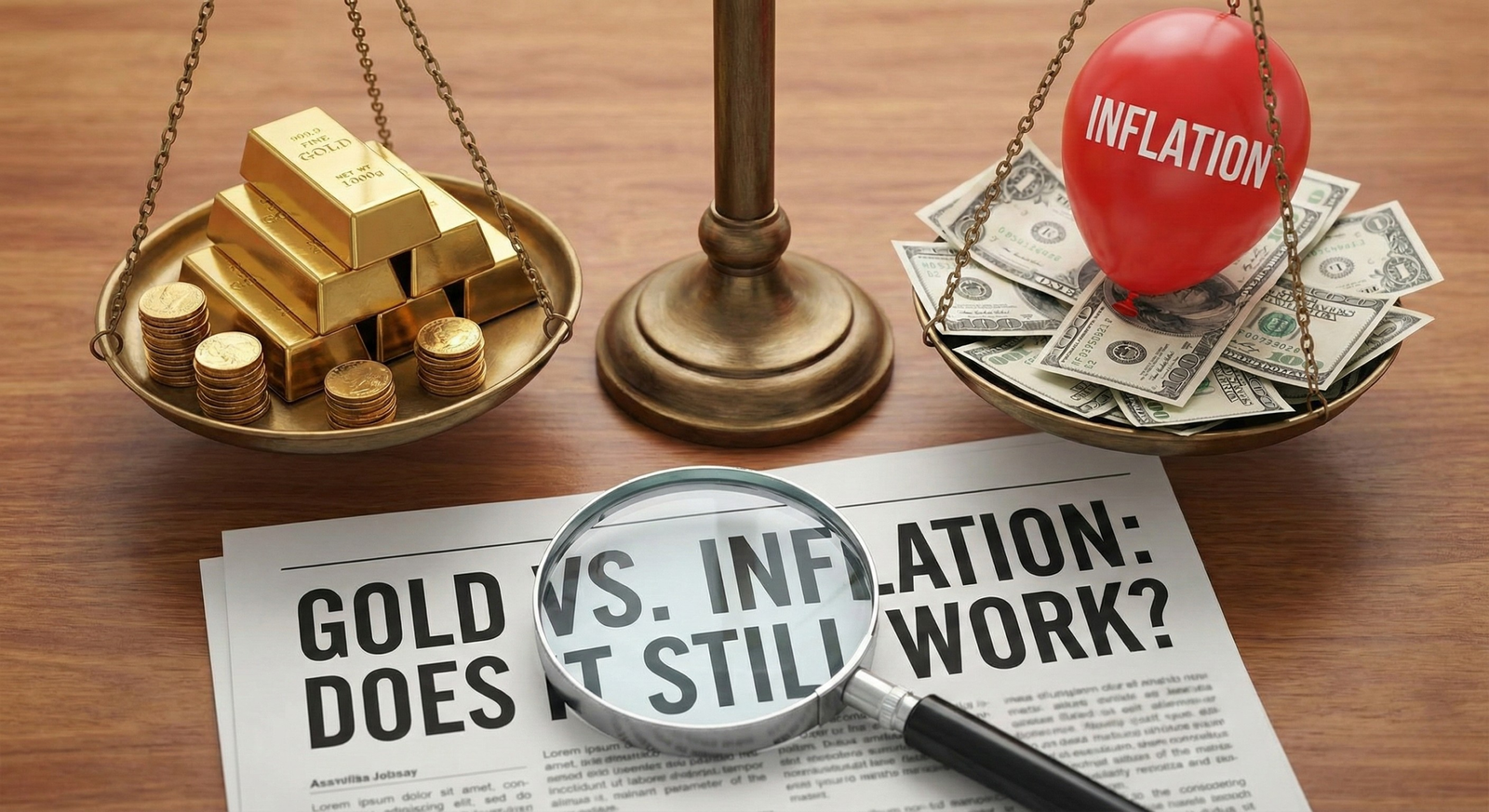
Gold vs Inflation: Gold has long been viewed as a hedge against inflation. Its effectiveness has varied across different economic environments. Understanding how gold vs inflation responds to inflation requires examining price levels, interest rates, monetary policy, and investor expectations.
In recent years, the relationship between gold vs inflation and inflation has been scrutinized. Many investors seek to understand how to protect their wealth in an unpredictable economic landscape. This article delves deeper into this complex relationship to provide insights and analyses.
The Historical Case for Gold as an Inflation Hedge
Understanding the historical context of gold vs inflation is vital for investors.
The dynamics of gold vs inflation are influenced by various economic factors.
In this analysis, we will explore the multifaceted relationship between gold vs inflation through seven key insights. We will examine how gold has been viewed as a hedge against inflation.
Specifically, gold vs inflation can provide stability during economic downturns.
Understanding the interplay between gold vs inflation and interest rates is crucial.
The relationship between gold vs inflation and real interest rates can impact investment strategies.
Understanding the Dynamics of Gold vs Inflation
Investors must weigh the implications of gold vs inflation in their decisions.
Investor expectations regarding gold vs inflation can drive market dynamics.
The sentiment surrounding gold vs inflation can lead to fluctuating prices.
Understanding the complexities of gold vs inflation can aid in better investment decisions.
The dynamics of gold vs inflation are crucial for long-term asset management.
In this analysis, we will explore the multifaceted relationship between gold and inflation through seven key insights.
Historically, gold has preserved purchasing power over long periods. In environments where inflation erodes the value of paper currencies, gold’s limited supply and monetary characteristics have supported its role as a store of value. During the 1970s, the United States experienced a significant inflationary period. Rates reached over 13%, and gold prices soared from around $35 per ounce to over $800 per ounce by 1980. This dramatic increase demonstrated how gold can serve as a refuge for investors when fiat currencies lose purchasing power.
However, gold does not respond mechanically to inflation readings. Short-term inflation spikes have not always resulted in higher gold prices, particularly when policy responses offset inflation pressures.
For example, in the aftermath of the 2008 financial crisis, inflation rates remained low despite massive stimulus measures. Gold prices initially surged as investors sought safety, but as economic recovery gained momentum and inflation stayed subdued, gold prices stabilized.
Real interest rates are a critical factor in gold’s inflation-hedging effectiveness. When inflation rises faster than nominal interest rates, real yields fall or turn negative. In these conditions, the opportunity cost of holding gold declines, often supporting stronger demand and higher prices. For instance, during the COVID-19 pandemic, the Federal Reserve maintained near-zero interest rates, leading gold prices to historic highs exceeding $2000 per ounce.
For example, in 2015 and 2016, as the Fed started to raise rates from historic lows, gold prices encountered downward pressure, highlighting how rising real yields can dampen gold’s appeal.
Investors may prefer bonds or savings accounts that offer higher returns relative to gold, contributing to a decline in gold demand during such periods.
Conversely, when central banks raise interest rates aggressively to contain inflation, real yields may increase. This makes gold less attractive compared to interest-bearing assets. For example, in 2015 and 2016, as the Fed started to raise rates from historic lows, gold prices encountered downward pressure, highlighting how rising real yields can dampen gold’s appeal.
This illustrates the complex interplay between inflation data and gold market reactions, where immediate responses may not align with long-term trends.
For instance, during the 1970s, the United States experienced a significant inflationary period, with rates reaching over 13%. During this time, gold prices soared from around $35 per ounce to over $800 per ounce by 1980. This dramatic increase demonstrated how gold can serve as a refuge for investors when fiat currencies lose purchasing power.
As conditions change, the relevance of gold vs inflation remains a critical topic for investors.
Furthermore, gold’s unique qualities—such as divisibility, portability, and durability—have made it a historically preferred asset during inflationary times.
These insights serve to shed light on how gold has historically functioned as an inflation hedge, the role of real interest rates, and how investor sentiment influences gold prices among other factors. Each section will be expanded to include relevant examples and explanations to better illustrate these concepts.
Historically, gold has preserved purchasing power over long periods. In environments where inflation erodes the value of paper currencies, gold’s limited supply and monetary characteristics have supported its role as a store of value. For instance, during the 1970s, the United States experienced a significant inflationary period, with rates reaching over 13%. During this time, gold prices soared from around $35 per ounce to over $800 per ounce by 1980. This dramatic increase demonstrated how gold can serve as a refuge for investors when fiat currencies lose purchasing power. Furthermore, gold’s unique qualities—such as divisibility, portability, and durability—have made it a historically preferred asset during inflationary times.
However, gold does not respond mechanically to inflation readings. Short-term inflation spikes do not always result in higher gold prices, especially when policy responses offset inflation pressures. For example, in the aftermath of the 2008 financial crisis, inflation rates remained low despite massive stimulus measures. Gold prices initially surged as investors sought safety. However, as economic recovery gained momentum and inflation stayed subdued, gold prices stabilized.
Real interest rates are a critical factor in gold’s inflation-hedging effectiveness. When inflation rises faster than nominal interest rates, real yields fall or turn negative. In these conditions, the opportunity cost of holding gold declines, often supporting stronger demand and higher prices. For instance, when the Federal Reserve maintained near-zero interest rates in the wake of the COVID-19 pandemic, gold prices reached historic highs exceeding $2000 per ounce. Investors were drawn to gold as a hedge against a potential decline in the value of their cash holdings. Conversely, when central banks raise interest rates aggressively to contain inflation, real yields may increase. In such environments, gold can struggle even as inflation remains elevated, as seen during periods when the Fed has signaled tightening monetary policy amidst rising inflation concerns.
Real interest rates are a critical factor in gold’s inflation-hedging effectiveness. When inflation rises faster than nominal interest rates, real yields fall or turn negative. In these conditions, the opportunity cost of holding gold declines, often supporting stronger demand and higher prices.
Conversely, when central banks raise interest rates aggressively to contain inflation, real yields may increase, making gold less attractive compared to interest-bearing assets. For example, in 2015 and 2016, as the Fed started to raise rates from historic lows, gold prices encountered downward pressure, highlighting how rising real yields can dampen gold’s appeal. Investors may prefer bonds or savings accounts that offer higher returns relative to gold, contributing to a decline in gold demand during such periods.
As conditions change, the relevance of gold vs inflation remains a critical topic for investors.
The ongoing discussion around gold vs inflation will shape future investment strategies.
Ultimately, recognizing the significance of gold vs inflation is essential for safeguarding wealth.
Gold tends to respond more to expectations of future inflation than to reported inflation data. If investors believe inflation will persist or accelerate, gold demand often increases. This phenomenon can be observed when markets react to anticipated economic policies, such as increased government spending or loose monetary policy, which may lead to fears of future inflation. If inflation is perceived as temporary or well-contained, gold’s response may be muted. For instance, in 2021, despite rising prices in various sectors, gold initially struggled to gain traction as investors weighed the transitory nature of inflation against a recovering economy.
Gold tends to respond more to expectations of future inflation than to reported inflation data. If investors believe inflation will persist or accelerate, gold demand often increases. If inflation is perceived as temporary or well-contained, gold’s response may be muted.
This distinction helps explain why gold has sometimes underperformed during periods of rising headline inflation but tightening monetary policy. During such times, investor sentiment can be swayed by broader economic signals, leading to fluctuations in gold prices that do not always align with inflation metrics. Understanding these dynamics allows investors to make more informed decisions about when to allocate resources toward gold in their portfolios.
Because gold is priced globally in U.S. dollars, inflation dynamics in the United States interact with currency movements. A weakening dollar can amplify gold’s response to inflation, while a strengthening dollar can offset inflation-driven demand. For instance, when the dollar lost value against other currencies in 2020 due to expansive monetary policies, gold prices surged to reflect increased demand from international markets. Outside the U.S., gold can serve as a more direct inflation hedge when local currencies depreciate rapidly, even if global gold prices remain stable. Countries experiencing hyperinflation can see their local gold prices spike, providing a vital safety net for citizens in an unstable economic environment.
Because gold is priced globally in U.S. dollars, inflation dynamics in the United States interact with currency movements. A weakening dollar can amplify gold’s response to inflation, while a strengthening dollar can offset inflation-driven demand.
Outside the U.S., gold can serve as a more direct inflation hedge when local currencies depreciate rapidly, even if global gold prices remain stable.
Gold is generally a more reliable hedge against inflation over longer time horizons than over short periods. It may lag other assets or experience periods of underperformance during shorter inflationary episodes. For example, during the early 2000s, gold prices remained relatively flat for several years before skyrocketing as the financial crisis unfolded.
Gold is generally a more reliable hedge against inflation over longer time horizons than over short periods. Over extended cycles, it has tended to maintain purchasing power, but it may lag other assets or experience periods of underperformance during shorter inflationary episodes. For example, during the early 2000s, gold prices remained relatively flat for several years before skyrocketing as the financial crisis unfolded, demonstrating that patience is crucial when using gold as a hedge. Gold’s strength as an inflation hedge is most evident when inflation coincides with monetary accommodation, fiscal expansion, or declining confidence in central bank credibility. In times of uncertainty and financial instability, investors flock to gold, recognizing its historical resilience.
Gold is generally a more reliable hedge against inflation over longer time horizons than over short periods. Over extended cycles, it has tended to maintain purchasing power, but it may lag other assets or experience periods of underperformance during shorter inflationary episodes.
Gold’s strength as an inflation hedge is most evident when inflation coincides with monetary accommodation or fiscal expansion. This correlation has been seen historically; for instance, during the 2008 financial crisis, aggressive monetary policy and rising inflation fears propelled gold prices to new heights.
Gold can still function as an inflation hedge, but its effectiveness depends heavily on the broader monetary and interest rate environment. Inflation alone is not sufficient to drive gold prices higher.
Factors including investor sentiment, currency movements, and real interest rates must also be considered. For investors, the relationship between gold and inflation is complex and requires an understanding of various economic indicators that can influence gold prices.
Informed decision-making, therefore, becomes crucial for those looking to leverage gold in their investment strategies.
In summary, the interplay between gold and inflation is multifaceted and influenced by various economic factors. Investors should remain attentive to these dynamics, as they can significantly impact gold prices.
As economic conditions evolve, the relevance of gold as an investment option remains strong, reaffirming its position as a critical asset for hedging against inflation risks.
The historical data supports the notion that gold can be a powerful tool in preserving wealth in challenging economic conditions, especially when viewed through the lens of inflationary pressures.
Ultimately, a well-rounded investment strategy should include a thoughtful consideration of gold vs inflation, as it offers a safeguard for assets during tumultuous financial periods.
For investors, gold’s value lies less in tracking inflation precisely and more in providing protection against sustained inflation combined with declining real returns on financial assets.
For investors, gold’s value lies less in tracking inflation precisely and more in providing protection against sustained inflation combined with declining real returns on financial assets. In this context, gold remains a relevant, though conditional, tool for managing inflation risk. It is essential for investors to assess not only inflation data but also real economic indicators, central bank policies, and geopolitical factors that can influence gold’s performance in the market. As we move forward in uncertain economic times, understanding the role of gold vs inflation will be critical for sound investment strategies.
For investors, gold’s value lies less in tracking inflation precisely and more in providing protection against sustained inflation combined with declining real returns on financial assets. In this context, gold remains a relevant, though conditional, tool for managing inflation risk.